Anadolu Ajansı © 2026



Here's a rundown of all the news you need to start your Monday, including US President Donald Trump saying Israeli Prime Minister Benjamin Netanyahu would have to accept any nuclear agreement Washington reaches with Tehran, Israel launching airstrikes on western and central Iran, and Iran saying its attacks on northern Israel were carried out in "self-defense.”
US President Donald Trump said Israeli Prime Minister Benjamin Netanyahu would have to accept any nuclear deal Washington reaches with Tehran, asserting that he alone controls American foreign policy decisions.
"He won't have any choice," Trump said in a telephone interview with the UK-based Financial Times. "I call the shots. I call all the shots. He doesn't call the shots."
Trump's remarks to the daily came after Iran launched ballistic missiles at targets in Israel in the most significant breach of a ceasefire reached in early April.
In earlier comments following the barrage, Trump told US broadcaster Fox News that he would instruct Netanyahu not to retaliate against Iran. Subsequent reporting by the news outlet Axios and Israeli media indicated that the two had concluded a phone conversation on the matter.
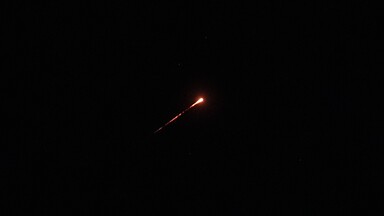
Israel launched airstrikes on western and central Iran as explosions were reported in several Iranian cities, according to Israeli and Iranian media reports.
The Israeli army claimed its air force struck military sites belonging to the “Iranian regime.”
Iranian state TV reported explosions in the capital Tehran as well as in Tabriz and Isfahan, while Tasnim News Agency reported blasts near the city of Karaj.
Iran said its attacks on northern Israel were carried out in “self-defense” following repeated Israeli ceasefire violations and recent attacks targeting Lebanon and Iranian interests.
In a statement, the Iranian Foreign Ministry said the strikes were conducted under Tehran’s “legitimate right to self-defense” in accordance with Article 51 of the UN Charter.
The ministry accused Israel of repeatedly violating an April 8 ceasefire and escalating attacks against Lebanon and Iran, including through cooperation with the “terrorist US army” in recent attacks targeting Iranian ships and sites in southern Iran.
Israel’s strike on Beirut activated the “first phase” of a broader response by the resistance axis, a senior adviser to Iran’s supreme leader said.
In remarks carried by Iranian media, Ali Akbar Velayati said the current security stability in the Bab al-Mandab Strait should not lead Israel into a “miscalculation.”
“The resistance axis has the capability to shut both waterways. The choice is yours: stop the foolishness or enter a balanced equation involving the two straits,” he said, referring to the Strait of Hormuz.
Türkiye-backed zero waste projects are helping create jobs, build local capacity and turn waste into economic value in partner countries, speakers said at the Zero Waste Forum in Istanbul.
During the panel titled “How to Engage with the Zero Waste Approach in Development Cooperation: The TIKA Example,” speakers focused on translating waste policies into development outcomes through international cooperation.
Mert Yunus Balci, adviser to the president of Türkiye’s Cooperation and Coordination Agency (TIKA), said zero waste has become a key development tool amid rising global waste and shrinking aid budgets.
He said global waste is expected to rise from 2.1 to 3.8 billion tons by 2050, with much of the increase in the Global South.
The Strait of Hormuz, a key chokepoint for global maritime trade, handled nearly 1,000 ships in the 100 days since the US-Israel-Iran war broke out in the region, marking a figure that the waterway would have seen in only a week under normal conditions.
The Strait of Hormuz is a narrow waterway at the mouth of the Gulf, connecting Middle Eastern oil and liquefied natural gas (LNG) to global markets via the Arabian Sea and the Indian Ocean.
The chokepoint accounted for 20% of global daily oil consumption and LNG trade prior to Feb. 28, when the US and Israel preemptively attacked Iran and Tehran made subsequent retaliations, striking regional infrastructure.
The waterway also accounts for one-third of the seaborne fertilizer trade.
news_share_descriptionsubscription_contact