DHAKA, Bangladesh
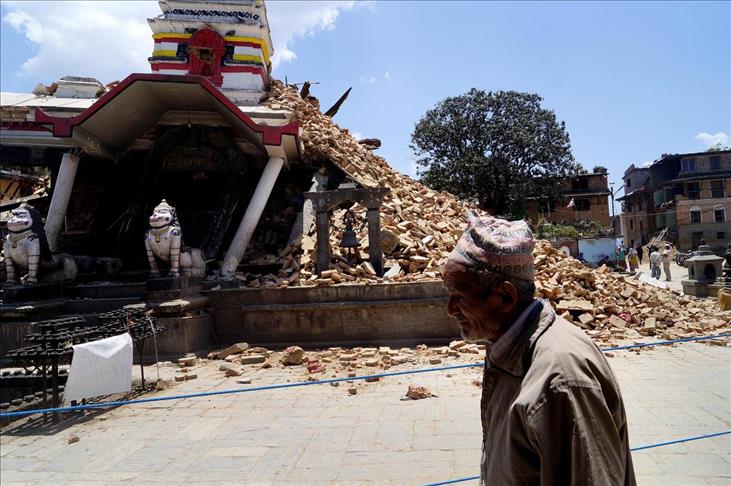
Nepal's government has urged the international community to help fund a speedier relief effort in the aftermath of last week's devastating earthquake.
The 7.8-magnitude earthquake has killed at least 7,356 people and injured more than 14,000, according to Nepali police.
Nepal's Ministry of Foreign Affairs called for $2 billion worth of donations to be delivered to its domestic relief fund during a meeting with diplomats Monday.
"We are concerned about the need to speed up the delivery of relief materials to the people in need with greater efficiency," said Foreign Minister Mahendra Bahadur Pandey, according to a briefing note published after the meeting. "While the immediate response needs to be in the form of rescue and relief, we need further support for rehabilitation of the victims and reconstruction of the infrastructures and architectures."
Nepal's government has been voicing concern that the rescue and relief efforts have not been effectively distributed, especially in remote parts of Nepal.
"The government would like to ensure that the support received from our friends at this difficult hour is best utilized for the benefit of the affected people. We expect cooperation and understanding of our donors and friends in sharing the list of relief materials they bring in," said Pandey.
Nepal's government had insisted Friday that all donations be directed towards its national relief fund, operated by the prime minister's office.
On Saturday, it said that it would be regulating certain non-government donation funds "so that benevolent donations are not misused."
The EU chief for humanitarian aid Christos Stylianides said Monday that the EU will donate a further 16.6 million euros ($18 million), bringing its total contribution to 22.6 million euros ($25 million).
The European Commission said in a statement Monday that it had deployed more humanitarian aid and civil protection experts, including engineers, to the affected areas in order to make sure aid went to where it was needed the most.
However, the commission also said providing relief supplies in the mountainous region of Nepal constituted a major challenge because of limited airport capacity and the risk of mud- and landslides.
Nepal's finance minister, Ram Sharan Mahat, said Sunday that the death toll could jump once relief efforts reached some of the most remote regions.
"There are still villages where we know that all houses have been destroyed, but have not yet been able to reach. The aftershocks have not receded and we expect the final casualty numbers to climb much higher," said Mahat.
"The monsoons are coming in less than two months, pre-monsoon rains are already here, and it will be another disaster if we cannot provide tents and requisite supplies over the next week or so," he added, asking for international contributions to Nepal's disaster fund.
Mahat also said the earthquake had set back Nepal's economic development and risked plunging many families back into poverty.