By Alex Jensen
SEOUL
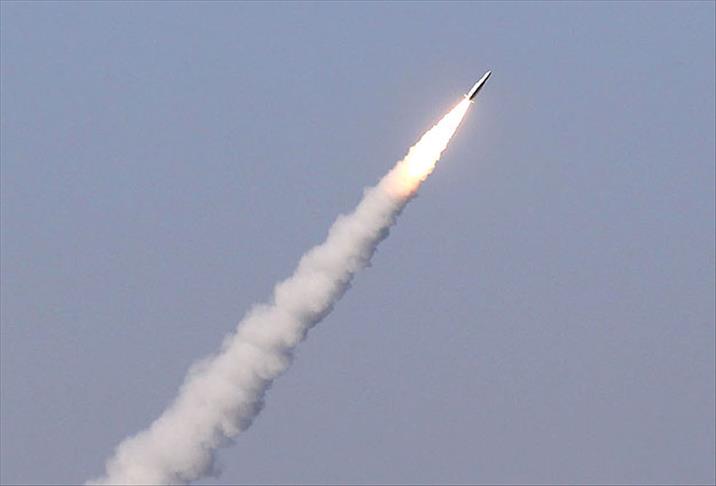
South Korea said it had detected the firing of two short-range rockets from North Korea’s eastern coast Wednesday morning – one day before the visit of Chinese President Xi Jinping to Seoul.
It is the third time since last Thursday that the North has test-fired missiles and rockets of various ranges.
The latest flew around 111 miles (180 kilometers) after being launched at 6:50 a.m., while the second was launched at 8 a.m., according to a statement from South Korea’s Joint Chiefs of Staff.
It was presumed they had been fired from a KN-09 - a 300-millimeter multiple-rocket launcher thought to be capable of striking key South Korean facilities.
The same launcher was used last week, and on Monday North Korea’s state media released an image of leader Kim Jong-un apparently overseeing the launch of 500-kilometer ballistic missiles.
Outside of being banned by the United Nations, the timing of the North’s latest action has raised questions of what message the reclusive state is aiming to send, and to whom.
On Monday, China’s Foreign Ministry Spokesperson Hong Lei insisted that the rocket and missile tests were unrelated to Xi Jinping’s trip – claiming his country “is a friendly neighbor” to both Koreas.
But Xi has chosen to visit South Korea before the North – the first time a Chinese president has elected to do so in more than 20 years.
The latest rockets were also again fired in the direction of Japan, despite Tokyo’s official protest at Sunday’s ballistic missile tests.
Moreover, Wednesday’s launches came a day after the South Korean government rejected a call for an end to military hostilities by the North, insisting that the onus was on the North Korean leadership to demonstrate sincere intentions to abandon its nuclear weapons program.
Also Tuesday, the South’s new Defense Minister Han Min-koo threatened to “mercilessly respond” to any provocations by the North.
Having only been formally appointed on Monday, the former head of the Joint Chiefs of Staff was making a trip to the western sea border area where 50 South Korean lives were claimed in two incidents in 2010.
The Koreas remain technically at war after an armistice - rather than a peace treaty - brought the 1950-53 Korean War to a close.
Xi and South Korean President Park Geun-hye are set to hold talks on a range of issues during his two-day stay in Seoul - including North Korea's nuclear ambitions.
www.aa.com.tr/en