07 February 2016•Update: 07 February 2016
By Alex Jensen
SEOUL
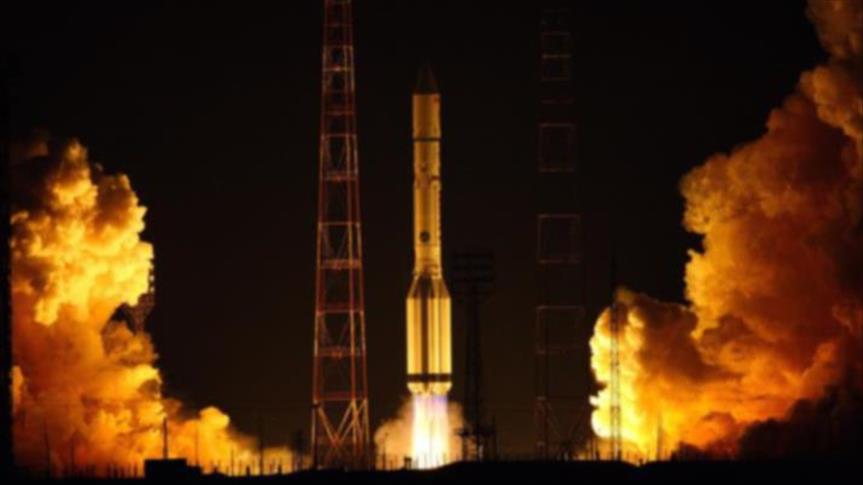
North Korea announced Sunday that it successfully blasted a satellite into orbit earlier in the day.
The official statement carried by Pyongyang's state-run media was backed up by a South Korean military official, who was quoted by local news agency Yonhap as admitting that "it's presumed that the projectile has entered into orbit."
South Korea's Joint Chiefs of Staff had earlier revealed that the launch took place just after 9.30 a.m. (0030GMT) from the same Dongchang-ri site as when North Korea last blasted a rocket into space, in 2012.
There had been some confusion with conflicting reports suggesting that the launch might have failed.
Successful or not, the rocket was fired just a day after it emerged that Pyongyang had brought forward its launch window -- having initially told a United Nations maritime agency that the earliest date would be Feb. 8.
Clear weather Sunday may have been a factor in prompting North Korea to decide to go ahead earlier, but the reclusive state had been under pressure to cancel what it described as a peaceful mission.
UN resolutions bar the North from ballistic missile technology, but the authoritarian state is yet to be punished for its nuclear test last month.
Interrupting her country's long holiday weekend in honor of the Lunar New Year, South Korean President Park Geun-hye convened an emergency response meeting while calling for tougher sanctions against North Korea.
A statement from Seoul's presidential office condemned the rocket launch as "an extreme provocation”.
Key regional players China and Russia have been pushing for dialogue over strict punishment since last month's nuclear test in the North.
The launch was also condemned by the U.S. administration, with National Security Advisor Susan Rice stressing that it violated multiple UN Security Council resolutions.
"North Korea’s missile and nuclear weapons programs represent serious threats to our interests – including the security of some of our closest allies – and undermine peace and security in the broader region," she said in a written statement.
"We condemn today's launch and North Korea's determination to prioritize its missile and nuclear weapons programs over the well-being of its people, whose struggles only intensify with North Korea’s diversion of scarce resources to such destabilizing activities," she added.
U.S. Secretary of State John Kerry later reaffirmed Washington’s "ironclad commitment" to the defense of allies, including the South Korea and Japan, in a press release.
"We will continue to work with our partners and members of the UN Security Council on significant measures to hold the DPRK [Democratic People's Republic of Korea/North Korea] to account," he said.
The Pentagon has also confirmed the launch with a written statement saying: “The missile was tracked on a southerly launch over the Yellow Sea."
China, a traditional ally of Pyongyang whose ties with South Korea have blossomed in recent years, expressed regret over the launch, calling for calmness and cautious actions to prevent further escalation of tensions.
"The DPRK should have been entitled to peaceful use of outer space, but this right is currently restricted by the United Nations Security Council resolutions," state news agency Xinhua quoted Foreign Ministry spokesperson Hua Chunying saying.
"China always holds that the way to long-lasting peace and stability on the peninsula can be found only through dialogues and consultations," she added.