Opium production strengthens Taliban in Afghanistan
The survey shows there has been a huge increase in poppy cultivation and opium production in 2014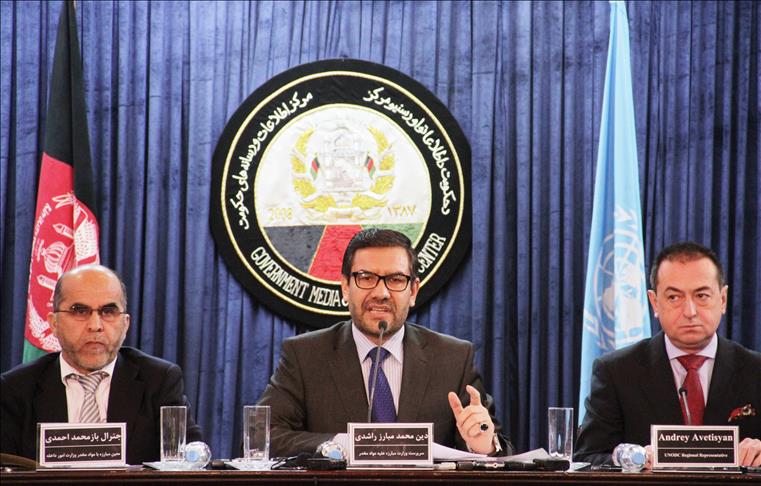
KABUL
The drug business has been a major source of income for Taliban warlords, the Afghan Minister of Counter Narcotics, Mobarez Rashidi, said on Wednesday.
"The country was awash with poppy fields that provide up to 90 percent of the world’s opium," Rashidi said in press conference on Wednesday.
"The Afghanistan government and international community should be concerned with poppy production as much as the Taliban," the Minister added.
The report, which was co-authored by the United Nations Office on Drug and Crime and Afghanistan’s Ministry of Counter Narcotics, noted that Afghanistan poppy production amounted to 28.7 kilograms per hectare in 2014.
Released by the United Information Service in Vienna and Kabul, the 2014 Afghanistan Opium Survey showed that poppy cultivation climbed seven percent in 2014 while opium production had increased by as much as 17 percent.
The UN agency's Executive Director, Yury Fedotov, said that Afghanistan’s narcotics problem is a continued global threat.
"We cannot afford to see the long-term stability of Afghanistan derailed by the threat of opiates," Fedotov said on Wednesday.
The link between instability and opium cultivation has become more pronounced in the country since 2007.
"The withdrawal of NATO troops from Afghanistan might lead to an increase in poppy cultivation and opium production, and this would be a serious threat to the country," Andrey Avetisyan, regional representative of the United Nations Office on Drug and Crime, said on Wednesday.
The vast majority of opium poppy cultivated in Afghanistan, 89 percent according to the survey, has been centered in nine provinces located the southern and western regions of the country.
These regions include the most insecure provinces of Afghanistan.
Opium is a key revenue source in Afghanistan, both for the farmers and the insurgency, which can make money by selling, transporting or processing the drug.
Afghanistan is the world’s leading drug producer, accounting for over 80 percent of all opiates on the global market.
According to the UN survey, revenue from opium production in Afghanistan soared in 2013 to about $3 billion, an increase from $2 billion in 2012.