ISLAMABAD (AA) – Pakistan's political and military leadership decided on Monday to hold peace talks with local Taliban who have been battling the armed forces under the banner of Tehrik-e-Taliban Pakistan (TTP) in different parts of the northwestern tribal belt for the past decade, in a bid to end homegrown militancy that has plagued this South-Asian Muslim nation for over a decade.
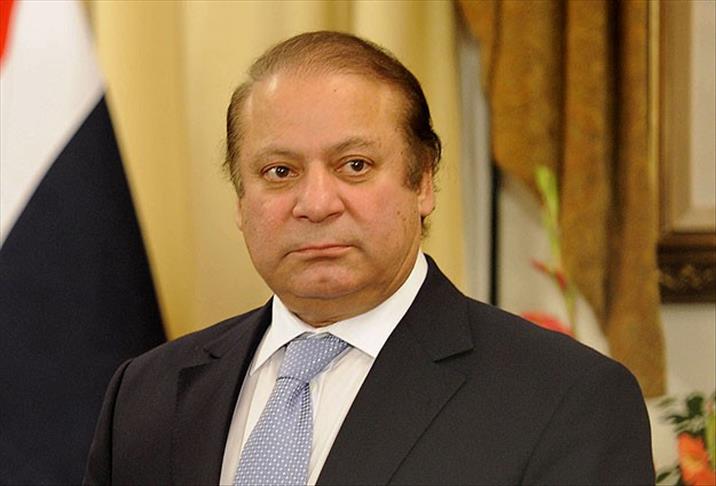
"The decision to hold talks with Taliban is our own. It has not been imposed by any external power," Prime Minister Nawaz Sharif told the participants of an all-party conference held at the prime minister's house.
"No one should have any objection to that," he stressed, referring indirectly to the US, which has been unhappy with previous peace deals between Pakistan and the Taliban.
The all-party conference was called by Sharif in hopes of reaching national consensus on how to deal with the issue of militancy and terrorism.
It was chaired by Sharif and included army chief Gen. Ashfaq Pervez Kyani and intelligence chief Lt. Gen. Zaheer-ul-Islam.
The meeting was also attended by all major treasury and opposition parties, including the two mainstream religious parties – Jamat-e-Islami and Jamiat Ulema Islam – which have already offered to mediate between the government and the Taliban.
After day-long deliberations, participants issued a six-point joint communiqué, the first point being the decision of the country's political and military leadership to hold long-awaited peace talks.
Kyani and Zaheer-ul-Islam briefed participants about ongoing military operations and the current strength of TTP-fed militants.
A participant of the conference, which was held behind closed doors, told Anadolu Agency on condition of anonymity that Kyani had asserted that the army was ready for war if the political leadership so decided.
"The armed forces are fully ready to defend the country from internal and external invasions. We have cleared a large area of militants and established the state's writ there," the meeting participant quoted Kyani as saying.
"We are fully ready for both war and peace. You take the decision, and the army will fully comply with it," he added.
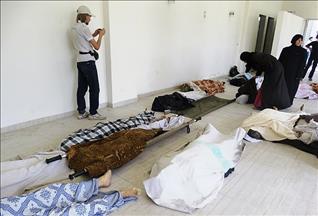
In his first address to the nation as prime minister, Sharif had promised to hold talks with the Taliban with a view to ending the violence that had claimed over 40,000 lives – including 4,000 security personnel – since 2004.
The dead also include over 3,000 tribesmen, many of them women and children, killed in US drone strikes during this period.
According to government statistics, the exchequer has incurred a loss of $70 billion since the country joined the US-led war on terror in 2002.
The Taliban had earlier rejected Sharif's offer, which they had said "lacked substance."
They have since softened their stance, however, announcing that they were ready for talks if the government was sincere.
- No drones
Liaquat Baloch, secretary-general of the Jamat-e-Islami, who represented his party at the conference, said there was consensus on peace talks.
"No force. No operations. The issue of terrorism and militancy will be resolved through dialogue," he told AA.
"Neither any political party nor the military leadership opposed the idea of holding talks with the Taliban," Baloch revealed.
"All participants were of the view that dialogue is the best option at this time," he added.
Conference attendees also decided to take the controversial issue of US drone strikes to the UN Security Council if needed.
"Thousands of Pakistanis have been killed in drone attacks and terrorism," said the communiqué. "The deceased include our women, children and security personnel."
Baloch asserted that Sharif and Kyani had categorically denied the existence of any verbal or written agreements with the US regarding drone strikes.
"We asked them clearly about any agreement on drone attacks. We told them that we were ready to discuss and understand if there was any agreement. But they categorically denied it," he said.
"It is, again, the unanimous decision of the political and military leadership to raise the issue at the UN Security Council if needed," Baloch pointed out.
Cricketer-turned-politician Imran Khan, chairman of Pakistan Tehrik-e-Insaf, which rules the northwestern Khyber Pakhtunkhawa province – which is the worst affected by militancy –, voiced satisfaction with the conference's outcome.
Before the conference, Khan had an hour-long, exclusive meeting with the prime minister and the army chief to discuss issues related to any secret agreements with the US regarding drone attacks and the war on terror.
"The meeting with the prime minister and the army chief was fruitful. I am satisfied with it," Khan told reporters, refusing to elaborate further.
Taliban welcomes Pakistan talks offer
"We welcome the government's peace talks offer," TTP spokesman Shahidullah Shahid told Anadolu Agency by phone from an unknown location.
Pakistan's political and military leadership decided earlier Monday to hold peace talks with local Taliban in a bid to end the homegrown militancy that has plagued this South Asian Muslim nation for over a decade.
"The decision to hold talks with Taliban is our own. It has not been imposed by any external power," Prime Minister Nawaz Sharif told an all-party conference.
"No one should have any objection to that," he stressed, referring indirectly to the US, which had expressed displeasure with previous peace deals between Pakistan and the Taliban.
Called by Sharif, the all-party conference aimed to achieve national consensus regarding how to best deal with the twin issues of militancy and terrorism.
The meeting was attended by all of Pakistan's major treasury and opposition parties, including the two mainstream religious parties – Jamat-e-Islami and Jamiat Ulema Islam – which had previously offered to mediate between the government and the militants.
After day-long deliberations, participants issued a six-point joint communiqué, the first point being the decision by the country's political and military leadership to hold long-awaited peace talks with local Taliban.
- Serious
The Taliban spokesman said the new peace offer seemed genuine.
"We had offered peace talks in the past, but they were never taken seriously," Shahid told AA.
"But the way the government has given the fresh offer, it seems it is serious this time," he noted.
Shahid said the Taliban Shura (consultative council) would convene within a day or two to give a detailed response regarding the mechanisms used for conducting the proposed talks.
In his first address to the nation as prime minister, Sharif had promised to hold talks with the Taliban in hopes of ending the violence that had claimed over 40,000 lives – including 4,000 security personnel – since 2004.
The dead also included over 3,000 tribesmen, many of them women and children, killed in US drone strikes during this period.
According to government statistics, the exchequer has incurred losses of some $70 billion since the country joined the US-led war on terror in 2002.
englishnews@aa.com.tr
news_share_descriptionsubscription_contact

contact_the_ombudsman
is_there_an_error_in_this_story