By Aamir Latif
KARACHI, Pakistan
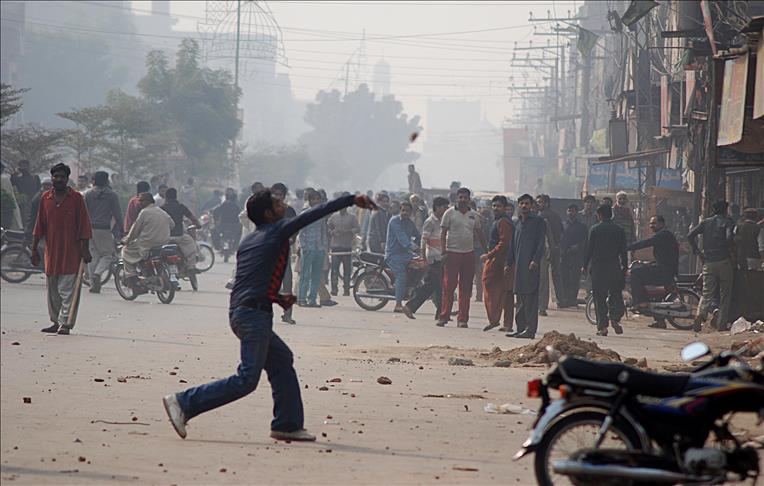
Amid a sweltering heat wave and the beginning of fasting for Ramadan, angry protesters in Pakistan have taken to the streets to protest about ongoing power cuts.
With the temperature reaching 46 degrees Celsius (114 Fahrenheit) in parts of Pakistan, protesters clashed with police in the northwestern Charsaddah and Swabi and southwestern Hyderabad districts on Friday.
Protesters set fire to the Water and Power Development Authority's (WAPDA) office in Hyderabad and also targeted the same authority in Charsaddah, where more than a dozen protesters were injured in police baton charges.
The power cuts caused water shortages in several cities with water pumping stations unable to operate without electricity.
Prime Minister Nawaz Sharif had given "strict" orders for no loadshedding during the pre-dawn Sehri and post-sunset Iftar meals, during which fasting Muslims can eat and drink, but local media reported that there were still power cuts during these times, with some coping without electricity for as long as 12 hours.
“Where is the prime minister and his promises? We have been without electricity since Sehri,” said Ghulam Hussein, a protester from Charsaddah. “It’s over 40 degrees centigrade here. How can we survive in this blistering weather without electricity, especially those who are fasting?”
Tahira Bibi, a protester in Hyderabad, said they were forced to protest because of the situation.
“Not only the electricity, we don’t have water even for Wudu [ablution for prayers] at home,” she complained.
The Minister for Water and Power Abid Sher Ali blamed the problem on increasing demand in Ramadan and problems with distributing power.
“We are trying to cope with the electricity demand. I appeal to the citizens to stay peaceful and not to attack WAPDA offices,” Ali told reporters.
Prime Minister Sharif has ordered the authorities to immediately reduce the duration of loadshedding.
Pakistan's power capacity is 6,000 megawatts short of the demand, with the discrepancy worsened by power theft, distribution faults and ill-trained staff -- often leading to power breakdowns.
The regular power shortages often lead to protests but have also hindered the country's economic development.
Sharif has tried to address the issue by focusing a large share of a $46 billion Chinese investment into power projects that he hopes can end the shortage.