Groups opposing a peace deal between the Philippines' government and the country’s main rebel unit lack the support to block the process, the chairman of a group monitoring the process said Friday.
"Both parties realized from the beginning that there will always be (other) parties who will try to disrupt the process," Alistair MacDonald told reporters in the Philippines’ capital Manila. "What are their numbers: 200…? 500…? That is a drop in the bucket.
"The Third Party Monitoring Team - led by MacDonald, a former European Union Ambassador to the Philippines – has been working in the country’s south for the last two weeks, gathering information from both sides in the decades-long conflict.
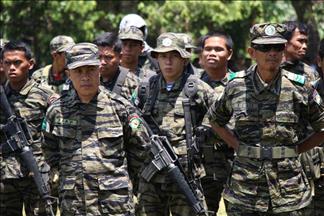
Since the 1970s, the Moro Islamic Liberation Front (MILF) and several other armed groups have supported a rebellion aimed at achieving independence for the country’s prominently Muslim South, in doing so offering what they term "a better life" for the predominantly Catholic country's Muslim minority.
With a resolution to end four decades of deadly conflict in place since last month, the government has agreed on an amnesty for those who have committed rebellion-related offences.
MILF’s 12,000 fighters are to sign a power-sharing deal in mid-March which will see an independent Islamic state in the south governed by a Muslim authority and the government, however several smaller factions have vowed to fight on, determined to win greater autonomy for the region.
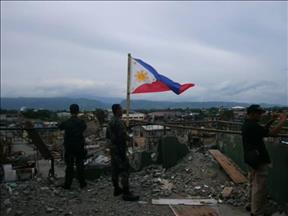
Philippines' forces have been fighting fierce battles with the areas main Muslim rebel group the Moro National Liberation Front (MNLF) and with the Bangsamoro Islamic Freedom Fighters (BIFF). Other groups battling on include Abu Sayyaf, which has carried out kidnappings, bombings and beheadings for more than a decade.
The deal aims to end an insurgency that began in the 1970s and has killed more than 150,000 people, mostly civilians. The violence has also left large parts of the country’s fertile southern region mired in poverty.
Huseyin Oruc - a member of the team monitoring the agreement – told the Anadolu Agency on Friday that laws still needed to be passed to implement the peace deal, but warned that politicians hostile to the agreement and court challenges could also emerge to disturb the process.
Oruc, an official of the Humanitarian Relief Foundation - a Turkish aid group, also called on Filipinos to publicly support the impending deal.
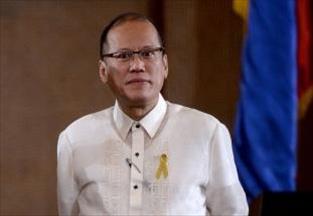
Philippine President Benigno Aquino III plans to pass laws to allow Muslim self-rule in the south in the next year.
englishnews@aa.com.tr