Ikrame Kouachi
27 August 2026•Update: 27 August 2026
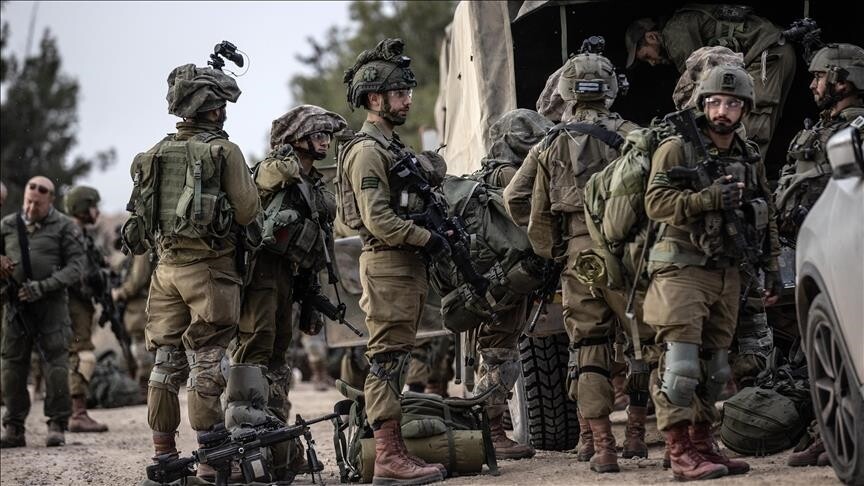
Israeli army Chief of Staff Eyal Zamir on Thursday ordered a heightened state of alert and additional troop deployments in the occupied West Bank as several Jewish holidays approach in September.
Zamir issued the order during a morning assessment of Israel’s multiple fronts, according to an army statement.
“Many challenges are ahead of us. We are advancing operational procedures across all fronts, from Iran to Lebanon to Gaza, and remain on high alert in accordance with the sensitive multi-front situation,” Zamir said.
Since Oct. 8, 2023, Israel has continued its genocide on the Gaza Strip, fought wars with Lebanon and Iran, launched strikes on Yemen and Qatar, and carried out near-daily ground incursions into Syria.
“Given the tensions in Judea and Samaria (West Bank) and the upcoming holiday period, I am ordering the elevation of readiness of an additional division headquarters in order to reinforce the forces in the area,” he added.
Zamir also ordered preparations “for the immediate deployment of units and battalions to reinforce the area.”
The Israeli minister stated that the army “across all of its arrays, will maintain full, multi-front readiness throughout the holiday period - there will be no reduction in operational forces.”
Several Jewish holidays are scheduled for September, including Rosh Hashanah from Sept. 11-13, Yom Kippur on Sept. 20, and Sukkot from Sept. 25 to Oct. 3.
Earlier in the day, Israel’s Channel 12 reported that the Israeli army has reinforced its troops in the occupied West Bank, raising the number of military battalions deployed there to 26.
The broadcaster did not provide further details on the scale of or reasons for the reinforcement.
Separately, the Palestinian Wall and Settlement Resistance Commission said Israeli authorities had seized about 15 dunams (1.5 hectares) of land belonging to the city of Al-Bireh in the occupied West Bank.
The commission said the seizure aims to establish a nearly 4,000-meter (13,123-foot) “security route” encircling an illegal settlement built on Jabal al-Taweel land east of the city.
The route effectively creates a “new buffer zone” around the settlement and “restricts Palestinian access to lands” between the settlement’s built-up area and the route, the commission said.
According to preliminary map assessments, the military order not only directly confiscates land but also restricts Palestinian access to more than 380 dunams (38 hectares) located between the existing settlement buildings and the route outlined in the order.
The commission said the move was part of an expanding policy adopted by Israeli authorities since Oct. 7, 2023, adding that 46 military orders have been issued to establish buffer zones around settlements during that period.
It said the orders indicate that settlement buffer zones are increasingly being used not as exceptional “security measures,” but as a routine mechanism for extending settlement control over Palestinian land without requiring immediate construction plans or formal changes in land ownership.