Teachers to strike in Argentina as inflation surges
Government says inflation isn’t as high as reported and workers are using numbers to get end-of-year bonuses.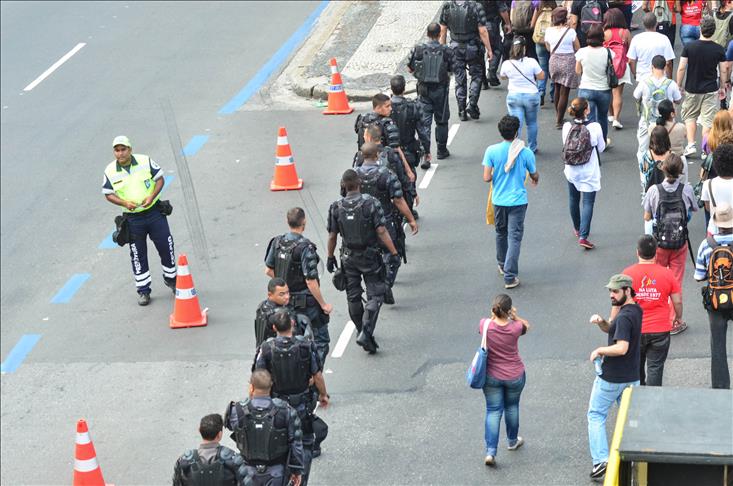
By Charles Newbery
BUENOS AIRES, Argentina
Teachers in Buenos Aires province will walk off the job for 48 hours next week to demand higher wages as inflation touches 40 percent annual, a labor group announced Thursday.
The Buenos Aires Teachers Union Front said in a statement that they will strike beginning Tuesday in the country’s largest and most populated province, after talks with the provincial government failed to address their demands.
“We need immediate answers that will provide a solution to the constant deterioration of our salaries,” the group said.
This includes salary hikes for this year and 2015, they said.
“Teachers will continue to fight for our rights until the government makes education a priority,” they added.
This is the latest labor tension to hit Argentina, with bankers striking last month and truckers and other sectors holding two national strikes earlier this year. Oil workers in the south will hold talks next week on improving their salaries after suspending a strike Thursday that had threatened to stall up to 90 percent of national oil production and 70 percent of natural gas.
A main source of tension is dwindling spending power as inflation edges beyond 40 percent annual, according to a compilation of private estimates by opposition lawmakers.
Until this year, the ruling Front for Victory party that took power in 2003 had kept salaries from rising above inflation numbers estimated by private economists, even when it averaged 25 percent annual from 2010 to 2013.
But the spike in inflation this year slammed the spending power for the first time since the party took power.
Fausto Spotorno, an economist at Orlando J. Ferreres y Asociados, an economic consulting firm in Buenos Aries, said on Radio FM Identidad that the decline in spending power is 8 percent this year, given that salaries hikes have averaged 32 percent.
The government denies that inflation is running as high as reported but doesn’t have figures to support its position because of a change to the consumer price measurements at the start of the year. That means it will only have month-on-month data from its consumer price index, not annual, until 2015.
Even so, Economy Minister Axel Kicillof said consumer prices are rising at a slower pace than 40 percent.
He called such high numbers “misleading” with the purpose of workers manipulating companies to pay large end-of-year bonuses.
“Let’s not play the game of trying to incite a ruckus in December in Argentina, because that’s what they want,” he said on C5N, a cable news network. “We have to be prudent and optimistic in Argentina.”
Even so, Roberto Lavagna, a former economy minister in the 2000s, warned that inflation will hold steady at between 35 percent and 40 percent in 2015, with food prices hovering between 42 percent and 44 percent, while the economy contracts.
“We are in the classic situation of stagnation and high inflation,” Lavagna said on Radio La Red.