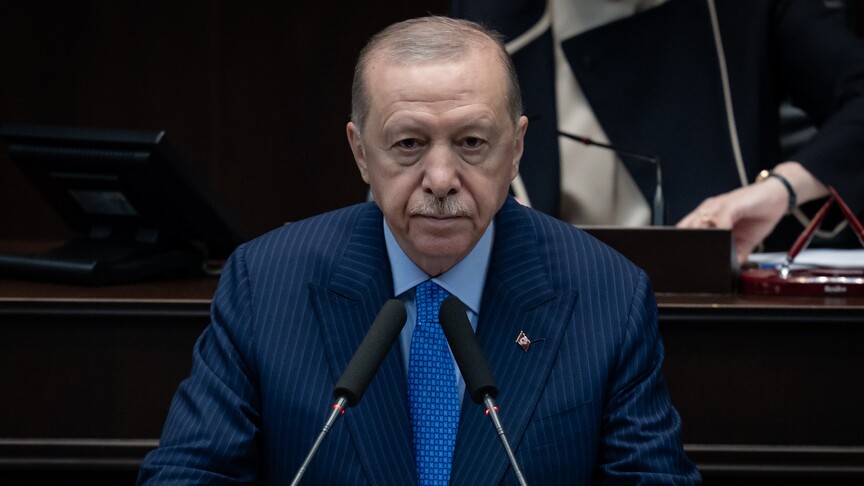
Turkish President Recep Tayyip Erdogan said on Wednesday that the announcement of US President Donald Trump’s participation in the NATO summit in Ankara was “a valuable step in terms of the alliance’s cohesion,” adding that Türkiye has intensified preparations for the gathering.
Speaking at his Justice and Development (AK) Party parliamentary group meeting, Erdogan said Türkiye attaches great importance to the NATO Leaders Summit scheduled for July 7-8 in Ankara.
“There is intense interest in the Ankara Summit not only among allies but also around the world,” he said.
“We have intensified our preparations to ensure that the Ankara summit becomes a reference point in NATO's history,” Erdogan said, adding that Türkiye would use the remaining weeks before the meeting as effectively as possible.
Erdogan said the announcement that US President Donald Trump would personally attend the NATO summit, scheduled for July 7-8, was “a valuable step in terms of the alliance's cohesion.”
He also said 2026 would be a year in which Türkiye’s international visibility and prestige reach new heights.
He noted that Türkiye will host the 77th International Astronautical Congress in October, followed by the 13th Summit of the Organization of Turkic States.
He also said Antalya will host COP31 on Nov. 9-20, bringing together participants from 197 countries and around 100,000 attendees.
"Türkiye's security begins not in Hatay, but in Aleppo, Damascus, and Beirut. Neither will we tolerate any faits accompli in our brothers' countries, nor will we turn a blind eye to aggression," he said, stressing that the country's security extends beyond its borders.
Erdogan said Syria and Lebanon are independent states that also form part of Türkiye’s “geography of affection and brotherhood,” describing Damascus and Beirut as “sister cities” of Istanbul.
“We will not tolerate any fait accompli in our siblings’ countries, and we will not turn a blind eye to any attack directed at them,” he said.
Israel, regional developments
Referring to regional developments, Erdogan said Israel has continued to threaten peace, prosperity, stability and security in the region.
He said the conflict in Gaza continues and accused Israel of simultaneously expanding military actions against Iran and Lebanon.
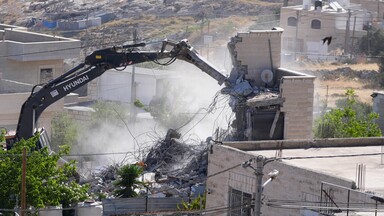
Erdogan noted that despite objections from Türkiye and other regional countries, Israel has refused to withdraw from Lebanon and continues military operations there.
He said that the international community's silence has emboldened Israel and is impeding the region's progress toward peace, stability, and security.
Erdogan pointed out that the attacks on Iran and Lebanon has far-reaching consequences not only for regional countries, but also for the entire world.
He also accused Israel of attempting to destabilize African countries and the Mediterranean region, describing the Israeli government as a source of unrest across a wide geography.
Erdogan also referred to what he described as the "delusion of the Promised Land," saying Türkiye was fully aware of Israel's ultimate objective. "By the will of God, we will never allow this," he said.
“We know your intentions, your goals and what you are pursuing,” Erdogan said, addressing what he described as those threatening Türkiye and its regional interests.
Warning against alignment with Israel, Erdogan said: "No one should seek adventure. No one should follow in the wake of the Zionist massacre network."
The Turkish president warned of broader consequences if Israel's actions were not restrained. "If Israel's banditry is not stopped, the entire world, together with the region, will bear the consequences," he said.
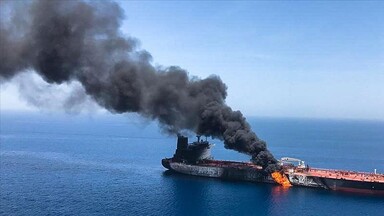
He said the effects of instability in the Strait of Hormuz have already been felt globally and argued that unchecked regional tensions could have wider consequences beyond the Middle East.
“Israel must be stopped. This is the duty of humanity and the front of humanity. History must not be allowed to repeat itself,” Erdogan said.
He added that Türkiye would continue working for peace and stability in the region despite attempts to undermine those efforts and would continue pursuing diplomatic initiatives together with neighboring countries and partners.
Erdogan also reiterated Türkiye’s solidarity with the people of Gaza and Lebanon.
Israel's genocide in Gaza since October 2023 has killed nearly 73,000 Palestinians and injured more than 173,000, most of them women and children, according to Palestinian figures.
While Hamas complied with the requirements of the first phase of the ceasefire agreement, Israel reneged on its commitments and continued violating the deal, while talks on moving to the second phase have remained stalled.
Israel has also prevented the entry into Gaza of the agreed quantities of food, medicine, medical supplies, shelter materials, and prefabricated homes, where around 2.4 million Palestinians, including 1.5 million displaced people, are living in catastrophic conditions.
Despite a ceasefire that took effect on Oct. 10, 2025, the Israeli army has killed at least 978 Palestinians and injured 3,097 others in near-daily attacks, according to the Gaza Health Ministry.
Cyprus issue
Referring to developments in the Eastern Mediterranean and Cyprus, Erdogan said Türkiye is closely monitoring attempts to ignite new tensions in the region.
He criticized what he described as actors pursuing unrealistic ambitions in the Eastern Mediterranean while aligning themselves with Israel’s regional policies.
He also cautioned against any challenge to Türkiye's interests in the Eastern Mediterranean. "If Türkiye's rights and the rights of the Turkish Cypriots in the Eastern Mediterranean are targeted, I want it to be known that our response will be very clear and very harsh," Erdogan said.
When asked by reporters after the meeting if he planned to visit the Turkish Republic of Northern Cyprus on July 20, Erdogan responded: "July 20 is already a visit we always make there. It will continue in the same way."
Cyprus has been mired in a decades-long dispute between Greek Cypriots and Turkish Cypriots, despite a series of diplomatic efforts by the UN to achieve a comprehensive settlement.
Ethnic attacks starting in the early 1960s forced Turkish Cypriots to withdraw into enclaves for their safety.
In 1974, a Greek Cypriot coup aimed at Greece’s annexation of the island led to Türkiye’s military intervention as a guarantor power to protect Turkish Cypriots from persecution and violence. As a result, the Turkish Republic of Northern Cyprus was founded in 1983.
It has seen an on-and-off peace process in recent years, including a failed 2017 initiative in Switzerland under the auspices of guarantor countries Türkiye, Greece, and the UK.
The Greek Cypriot Administration entered the European Union in 2004, the same year that Greek Cypriots single-handedly blocked a UN plan to end the longstanding dispute.