Nilay Kar
19 November 2015•Update: 20 November 2015
ISTANBUL
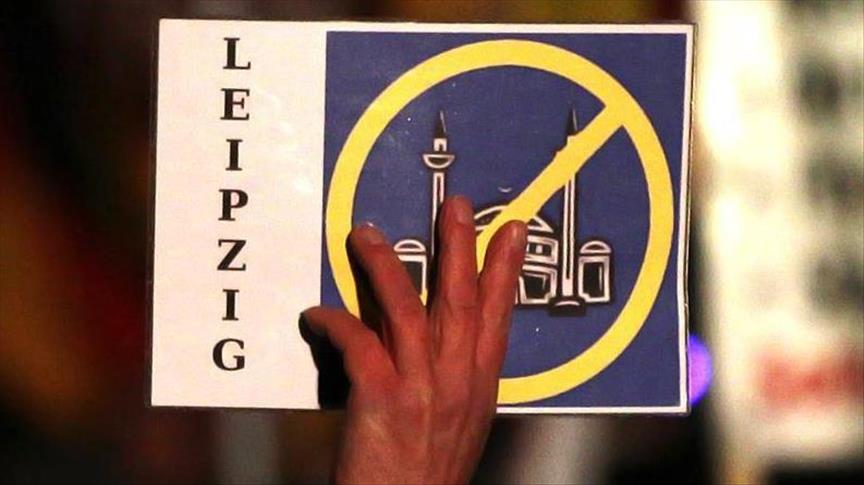
Turkish academics and political experts fear an anti-Islamic mood and racial hatred will intensify in Europe in the wake of the deadly Paris attacks.
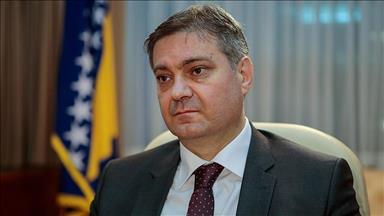
Speaking ahead of a panel discussion hosted by Turkish think-tank SETA in Istanbul on Thursday, political scientist Talha Kose said some minorities in Europe could be “badly affected”.
“I think Muslims and refugees living in Europe will be badly affected by the recent Paris attacks in the coming days,” said Kose, an associate professor at the Political Science and International Relations Department of Istanbul Sehir University.
At least 129 people were killed and more than 300 people were injured in Friday night’s suicide and gun attacks at several locations -- including a stadium, restaurants and a concert hall.
The terrorist group Daesh claimed responsibility for the Paris carnage, which has sparked a massive police operation to catch the killers.
Kose suggested a backlash could energize European parties hostile to refugees and Muslims:
"The effects of ultra-right parties, who are against migrants, will increase on the political scene," Kose said.
Birol Akgun, director of the Ankara-based Institute of Strategic Thinking, agrees:
“I fear that, after the Paris attacks, some political steps may be taken in Europe in the coming days in order to limit the freedoms of Muslim minorities living in Europe," he says.
Akgun also claims that the latest attacks in Paris will affect the entire refugee policy of Europe:
"I predict that Europe will close its doors to refugees, especially from Syria. After the public pressure, it is not easy for European countries to accept refugees as they seem to be a threat," he said.
According to the academics, changing a burgeoning anti-Islamic mood will take some time.
Selin Senocak, director of Occidental Studies at Istanbul Aydin University told Anadolu Agency: “In the eyes of Europe and the West, there is a sense that Islam is a religion which is barbaric and kills people.
“It will take a long time to change this,” she says.
Kose points to instability in the Middle East as fanning the flames of division in Europe: “As long as the conflicts continue in Syria and Iraq, and Daesh carries on operating there, there will be some people who want to join the organization.
“The first thing that can be done is to find a lasting solution [to the Daesh issue],” Kose notes.
The solution is to be found in Europe's policies, the experts say.
“I think Europe should reconsider themselves and think of why they have lost the people there joining Daesh,” Kose says.
Senocak holds similar views.
“Before France starts a war against Daesh, it needs to make some social reforms immediately to prevent the young people living there from falling into the trap of Daesh.”
She also highlights the importance of Turkey's role in changing skewed perceptions of Muslims: “As a country which is secular and has an Islamic identity, [Turkey] can achieve this through cultural diplomacy," she says.
The attacks were the latest terror assault in Paris, in a year which has seen the French capital repeatedly become the scene of deadly violence. A gun attack on French satirical paper Charlie Hebdo and a shooting in a kosher supermarket in January left 17 people dead.
Police in France have been involved in a number of fatal shootouts with suspects linked to the Nov. 13 murders. French MPs today voted to extend a state of emergency.