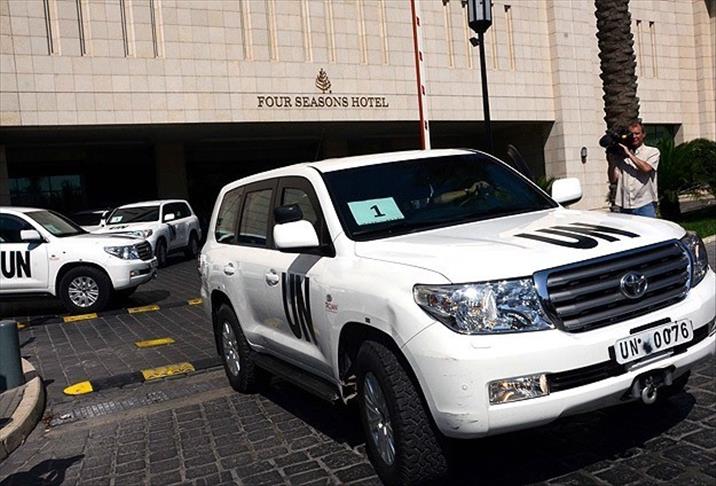
UNITED NATIONS (AA) - The report of the United Nations (UN) inspectors team indicated that chemical weapons were used on a "relatively large scale" in the Ghouta suburbs of Damascus on August 21. The environmental, chemical and medical samples provide such evidence that “surface-to-surface rockets containing the nerve agent sarin were used.”
The UN investigation team headed by Swedish scientist Ake Sellstrom, in its report to the UN Secretary-General Ban Ki-moon, elaborated on the methods, findings and the conclusions of the UN mission as a aresult of its activities in the Ghouta area of the Syrian capital of Damascus.
The findings, based on the evidence the UN team obtained in the course of its activities in the Ghouta area, provided "clear and convincing evidence that surface-to-surface rockets containing the nerve agent sarin were used in the Ein Tarma, Moadamiyah and Zalmalka in the East Ghouta area of Damascus.”
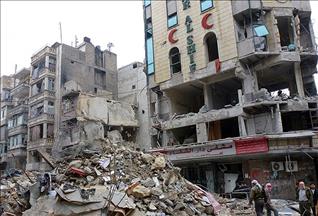
The UN investigators team concluded that chemical weapons were used on a relatively large scale in the Ghouta area of Damascus in the context of the ongoing conflict in Syria. "The attack resulted in numerous casualties, particularly among civilians."
Detailing on the methods of the UN team of inspectors while carrying out the probe on chemical weapons use, the report said the team interviewed more than 50 survivors, medical personnel and first responders, assessing the individuals’ symptoms and collected biomedical samples, including from hair, urine and blood.
The mission also documented and sampled impact sites and munitions, and collected 30 soil and environmental samples – far more than any previous such UN investigation.
According to the report, survivors experienced a range of symptoms, including shortness of breath, disorientation, eye irritation, blurred vision, nausea, vomiting and general weakness, many eventually losing consciousness.
The health workers with whom the UN mission also interviewed, reported seeing a large number of people lying in the streets without external signs of injury, some with laboured breathing, most of them unconscious.
The report went on to say that the weather conditions on August 21 were conducive to maximizing the potential impact of an attack involving heavy gases, which can stay close to the ground. "The downward movement of air would have allowed the gas to easily penetrate the basements and lower levels of buildings and other structures where many people were seeking shelter."
- Report confirms use of sarin gas by 'surface-to-surface rockets' -
The UN Report also explained that “environmental, chemical and medical samples that were collected provided such evidence that “surface-to-surface rockets containing the nerve agent sarin were used.”
The environmental and biomedical samples demonstrated the widespread nature of the attacks while 58 per cent of the blood samples tested positive for sarin, said the report
Besides, almost all of the biomedical samples were taken from 34 of the 36 patients who had signs of poisoning, tested positive for exposure to sarin.
The report also added that the UN Mission has yet to complete its investigation of the other allegations of the use of chemical weapons in Syria, returning to Syria as soon as practical to complete its investigation of Khan Al Assal and all other pending allegations before completing its final report.