Ekip
24 October 2015•Update: 25 October 2015
By Alex Jensen
SEOUL
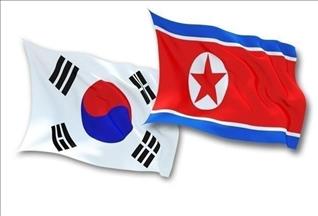
As hundreds more South Koreans crossed into North Korea for the last of this week’s family reunions Saturday, one woman divided from her relatives told Anadolu Agency of the urgency of arranging more gatherings while those separated are still alive.
"Even if it’s just once, only once, you want to see your family members before you go,” 75-year-old Chahee Lee Stanfield told Anadolu Agency.
Lee Chahee was just five years old when her family was, in her own words, “split forever”.
Like many other children -- along with unborn babies, siblings, parents and spouses -- she fell victim to an indiscriminating division carried out between the end of World War II and the cease-fire that brought the 1950-53 Korean War to a close.
Lee has not seen her father or one of her brothers since, but she has made it her mission to support others in the same position, having taken up the role of executive director at the United States-based National Coalition for the Divided Families.
With time against them, the sad reality for many of those still waiting is that they may never see their lost family members again.
Since the reunion process began in 2000, fewer than 19,000 relatives have been brought back together for heartbreakingly brief contact before returning to forced estrangement.
Of nearly 130,000 applicants from South Korea alone, around half have now passed away.
Lee, who moved to the U.S. from the South, is among an estimated 100,000 first generation Korean-Americans with immediate relatives in North Korea.
She was divided from her father and brother when they left for a brief trip to wrap up family business in China.
Lee later discovered that both men had ended up in North Korea after being trapped in post-colonial Manchuria.
As it turned out, her siblings had unknowingly fought against each other in the Korean War.
Her father is now dead. She does not know whether her brother in the North is alive or not, but she is adamant that the gatherings should continue.
Even though each of this week’s reunions was scheduled to last just 12 hours in total, Lee says they are the only source of hope for now.
“There is no happy ending for the divided families. Most [of them] are in their 80s and 90s, and they have waited to see their family members for more than 60 years,” she said, recalling how her mother used to weep alone at night.
“There are two choices for the divided families. One is burying your lifetime pain and longing to see your family members in your heart and carrying them to your grave."
"Or even if it’s just once, only once, you want to see your family members.”
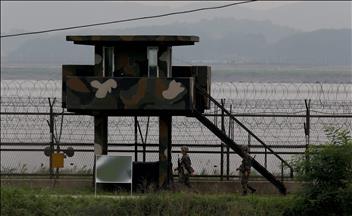
The main obstacles to a humanitarian solution are political -- North Korea’s nuclear weapon ambitions are a constant source of friction, while Pyongyang is aggrieved by the presence of nearly 30,000 U.S. military personnel in the South.
That is not to mention the chasm between a dictatorial dynasty in the North and openly-elected South Korean governments.
While the year 2000 saw the dawn of a period of cooperation and the first ever inter-Korean leaders’ summit, recent years have been punctuated by provocations and fragile ties.
These latest reunions were arranged thanks to a breakthrough North-South deal reached in August, but uncertainty hovered over preparations right until the first group of South Koreans arrived Tuesday.
Seoul’s official line is that it aims to hold further dialogue with Pyongyang after the 250 current visitors from the South return across the border Monday.
For Lee and thousands more like her, the hope is that those talks will come sooner rather than later -- and that a resolution can include the many separated Korean relatives spread across the world.