by Shadi Khan Saif
KABUL
A new fighting season in Afghanistan, launched by the Taliban in April, has also meant new focus on 'soft targets' like foreign aid workers in recent weeks, leaving the country's civil society concerned about how to safely deliver aid in the country.
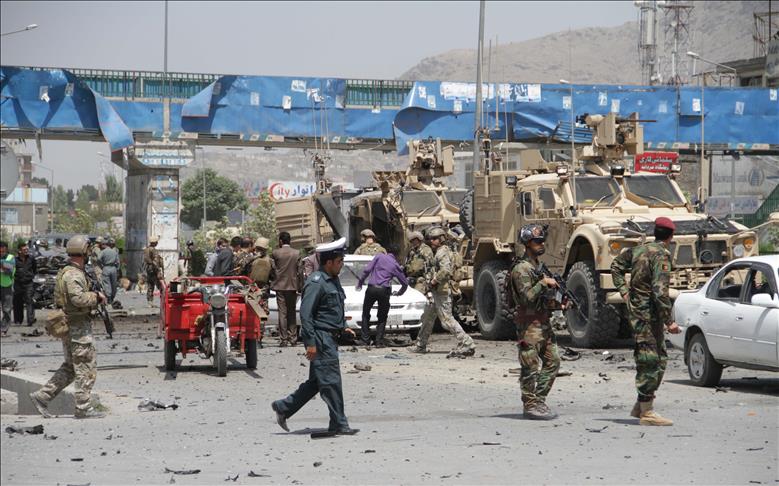
In the period of a month, two guest houses frequented by foreigners, a foreign aid agency and the country’s main Kabul International Airport were targeted in brazen attacks that killed almost 30 people and created panic about safety for foreigners, who are often dubbed "invaders" by the Taliban.
Most recently, nine workers from Czech NGO People In Need (PIN) were killed at their remote field base in northern Afghanistan's Balkh province after unidentified gunmen stormed the compound, killing the security guards and then the workers.
Though the police have blamed the Taliban, the group itself has not claimed responsibility for the attack, nor has any other group. PIN, which worked with remote rural communities, said it received no warnings, threats, or other messages that would have indicated a pending attack.
The organization said in a statement that because of increasing risks for foreign workers in Afghanistan it had suspended its activities until safety was ensured.
There have been 26 aid workers killed, 17 wounded and 40 abducted since January, according to the main umbrella body for aid organizations in Afghanistan; the Agency Coordinating Body for Afghan Relief and Development.
In the heart of the capital Kabul, the local Aschiana Foundation provides basic support to thousands of street children. The organization relies heavily however on foreign funding, which is harder to come by in times of heightened insecurity.
The organization's director, Mohammad Yosuf, told Anadolu Agency that the current spring fighting season has forced even more children to the street, increasing the need for their work.
“The growing insecurity, especially in the provinces, is forcing more and more people to seek shelter in Kabul but they often do not have jobs so their kids are compelled to either work or beg on the streets,” Yosuf said.
In the eyes of Peter Dalglish, a senior U.N. advisor in Afghanistan, insecurity jeopardizes the delivery of aid in Afghanistan and impacts the amount of funding that comes in.
“[The] security situation affects everything, it affects the ability of children even to safely come here to the project, it affects the ability of the representatives of the international organizations to come and see the good work of organizations like Aschiana, it creates a funding crisis,” he said.
“We cannot always expect the national ministries to come up with solutions, in the end it is the community leaders, it's local communities, women in the community who provide solutions," he said.
According to the U.N., Kabul doctors have seen a 50 percent increase in the number of civilians visiting hospitals for conflict-related injuries compared to this time in 2014, which had been the deadliest year for civilians since 2009.
Alexey Yusupove, the Country Director for Freidrich Ebert Stiftung (FES), a German NGO, said the mounting militant threat makes sustainable aid work difficult, with many aid agencies concerned about their safety.
“We see entrenchment and isolation policies and re-evaluation of projects in the field. The security trends of this and the next summer will be decisive in terms of shaping international development assistance in Afghanistan,” he said.