Ben Tavener
SAO PAULO
Workers at a Volkswagen factory called off a 10-day-old strike Friday after the carmaker said 800 layoffs at the plant, announced at the beginning of the year, would be reinstated.
Work at the factory in São Bernardo do Campo, in the ABC region of Greater São Paulo, will restart Monday, the ABC Metalworkers' Union said Friday, after confirmation that the workers would be rehired.
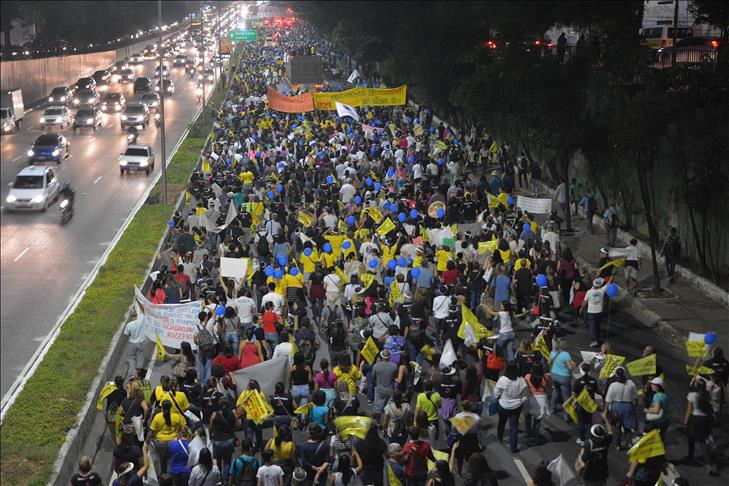
The strike began Jan. 6 and saw thousands of workers forming a picket line at the factory, where work was paralyzed.
The union, that led negotiations with VW bosses, said a new proposal had been accepted, which will now see wages frozen in 2015, but readjusted in 2016. The previous deal incorporated no pay raise before 2017, according to the Folha de S.Paulo newspaper.
The company will continue to offer financial incentives for voluntary layoffs.
Earlier this week, union members from three manufacturers -- Volkswagen, Mercedes-Benz and Ford -- held protests that united 10,000 workers, according to police figures, blocking highways in the south of São Paulo.
Mercedes also announced at the beginning of the year that 244 workers had been laid off; there has been no word on whether they will be rehired.
The Volkswagen factory in São Bernando do Campo is the biggest in Brazil, and one of four owned by the German carmaker. The facility employs some 13,000 of Volkswagen's 23,000 employees in the country.
The company employs more Brazilians than any other in the sector, according to its Brazil-oriented website.
The layoffs came after car sales in Brazil fell sharply, down 7.15 percent in 2014, according to the Brazilian Federation of Car Dealerships, Fenabrave.
The weaker performance of a less attractive Brazilian economy and reduced access to consumer credit have been blamed. As a result, production at Volkswagen's factories shrank 15 percent last year, the carmaker said.
Since 2012, the government has offered tax incentives to the sector, including zero IPI -industrialized product tax – on some models, in a bid to spur sales. In exchange, carmakers were asked to maintain employment levels.