By Aamir Latif - Anadolu Agency
ISLAMABAD
Militant infighting, a deficit of trust between negotiators, time-wasting tactics and misplaced intentions all appear to have been major obstacles to the success of the stop-start peace talks Pakistan's government and Taliban attempted to hold during the first few months of 2014.
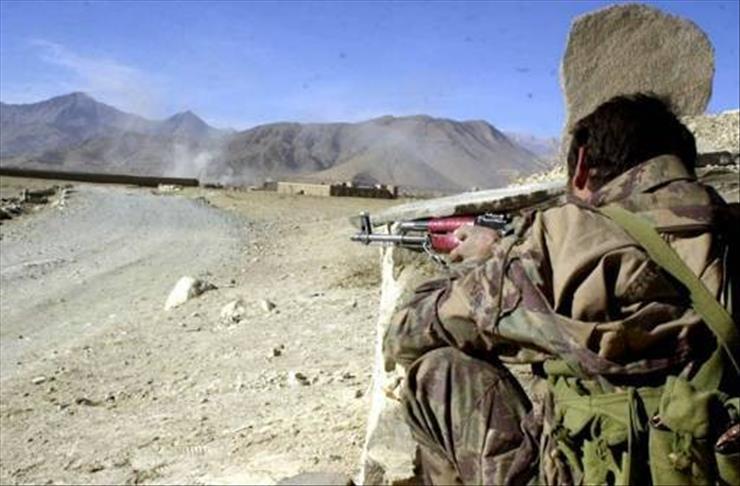
Experts fear that following the failed talks, there could be increasing numbers of clashes between security forces and the Tehrik-e-Taliban Pakistan (TTP) network of militant groups. Battles between the two sides have already claimed more than 100 lives in the last two weeks -- primarily in lawless northeastern region North Waziristan, which has been a hotspot for violence since the army forced the Taliban from their previous stronghold in neighboring South Waziristan.
“Taliban needed time to pass the treacherous winter in the tribal region as they could not use mountains for establishing hideouts due to snowfall,” Karachi-based security and defence analyst Ikram Sehgal told Anadolu Agency, pointing out that the harsh weather forces the Taliban to station themselves in exposed valleys, rather than mountains. “Now the winter and the ceasefire both are over, thus we are going to see another showdown, which might be more fierce.”
Amir Rana, an Islamabad-based security analyst, said both sides took advantage of the ceasefire, with the government using it as a respite from militant attacks which had crippled the country’s social and economic fabric. For the Taliban, Rana said, the ending of drone attacks in North Waziristan was the biggest achievement of the talks.
“They (security forces) succeeded in containing the Taliban attacks for the time being,” he said. “Now, both sides are flexing their muscles for the summer onslaught after achieving their respective goals, although not fully.”
Infighting between rival TTP factions is also considered to have hampered talks, with the Taliban leadership preoccupied with overcoming the divisions within its ranks.
More than 80 militants have been killed in fighting between the rival Khan Syed Sajna and Shaharyar Mehsud groups over control of the TTP’s South Waziristan chapter.
Taliban and intelligence sources say that some TTP-affiliated groups have been opposing the peace talks, as they believe the government is just using the process to create division among the Taliban.
Sehgal sees this trust deficit between the two sides as another reason for the failure of the peace talks. “Both sides are not showing their cards, at least at the moment, as they are not ready to fully trust each other,” he said.
Politics, not security
Rana said the peace talks with the Taliban were held with a view to furthering political goals rather than improving security.
“If the talks were supposed to be held in the perspective of North Waziristan, then it should have been restricted to that. But unfortunately, the process was politicized, and spread to the entire country, which was wrong," he said. “I believe the government will be under a tremendous pressure from political and military circles. Either it has to resume the suspended talks or permit the army for a full-fledged onslaught on North Waziristan.”
Operations in North Waziristan have long been demanded by the United States, who Pakistan has closely supported in its so-called war on terror. The United States is concerned about the presence in North Waziristan of the powerful Haqqani network, who have carried out numerous attacks in neighboring Afghanistan but whose Pakistan wing, the Gul Bahadur group, have held a peace agreement with Pakistan's security forces since 2007.
In case of an operation in the North Waziristan, experts say, the army will lose the advantage of a rivalry between the TTP and Gul Bahadur group and instead have to bear the brunt of their combined strength.
www.aa.com.tr/en