WASHINGTON
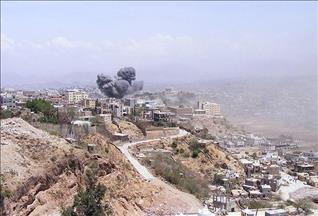
Yemen's President Abd-Rabbu Mansour Hadi has left his residence in Aden, the State Department said Wednesday, amid fighting with Houthi rebels and security forces.
Conflicting reports have emerged as to Hadi’s whereabouts.
Presidential sources have told the Anadolu Agency that "President Hadi is still in Yemen," but local media reports he left the country, with some suggesting he left for Djibouti via a sea route due to the Houthis control of the airport.
State Department spokeswoman Jen Psaki gave only limited details about the situation.
"He is no longer at his residence," she said. "We were in touch with him earlier today," she added but said she could not confirm any additional details about his location.
Loyalists of the Shiite Houthi group seized control of several of Aden's state institutions earlier Wednesday, and forces loyal to former President Ali Abdullah Saleh reportedly seized control of the city's main airport.
But Pro-Hadi vigilantes regained control of airport, according to Yemeni sources.
The attacks came as Houthi forces advanced in Aden, from where Hadi had sought to reinstate his presidency after fleeing the capital of Sanaa late last month.
Yemen has been rocked by turmoil since last September, when Houthi rebels overran the capital from where they have sought to extend their influence to other parts of the country.
Psaki condemned the "military actions undertaken in Yemen that have targeted President Hadi."
“The actions of the Houthis and former President Saleh have caused widespread instability and chaos that threatens the well-being of all Yemenis," she said.
White House spokesman John Earnest agreed "The United States continues to strongly condemn the recent offensive military actions undertaken in Yemen that have targeted President Hadi."
"There is a path here that can be pursued to try to resolve the differences among the parties," he said but argued that the path cannot be pursued as long as the Houthis are working with former President Saleh to foment instability.
The Houthis, who are believed to be supported by Iran and boosted by Saleh, has battled Hadi since last year.
The group issued what it described as a constitutional declaration dissolving parliament and established a 551-member transitional council.
The declaration, however, was rejected by most of Yemen's political forces – along with some neighboring Gulf countries – that described it as a coup against constitutional legitimacy.