Yasin Güngör
29 April 2026•Update: 29 April 2026
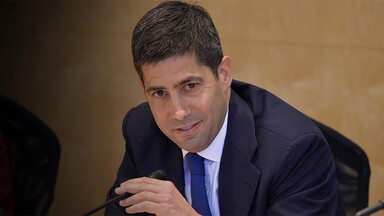
The US has spent approximately $25 billion on the war against Iran, according to a senior Pentagon official who testified before a House committee on Wednesday.
The department's acting Chief Financial Officer Jules W. Hurst III said most of the cost stemmed from munitions spending.
Hurst said operations and maintenance costs, and equipment replacement also counted in the total spending.
He added that the agency will soon submit a formal supplemental budget request to Congress via the White House once "we have a full assessment of the cost of
the conflict."
Pentagon seeks $1.5 trillion budget
Defense Secretary Pete Hegseth said the requested $1.5 trillion for fiscal year 2027 budget "reflects the urgency of the moment, addressing both the deferment of long-standing problems, as well as positioning our forces for both the current and the future fight we think."
He argued that the previous administration hollowed out the defense industrial base with "America last" policies, and said the Trump administration was putting
it back on a "wartime footing."
During the hearing, Hegseth fiercely rejected characterizations of the Iran war as a "strategic blunder" or a "quagmire." He asserted that the "loose talk" undermines the military mission and that the American public remains supportive of the operation.
Responding to questions about whether Iran's alleged revenue from sanctions relief allows Tehran to purchase Chinese missiles, Hegseth dismissed the claim. "We're ensuring and they're not buying Chinese missiles," he said.
Hegseth also addressed concerns about the Chinese threat in drone production, noting he supports a ban on DJI drones due to national security threats. "Drones are so central to the future of warfare," he said, announcing the upcoming formation of a sub-unified command for autonomous warfare.
He acknowledged that technological races, particularly in quantum computing, will determine future dominance in command and communications.
On Ukraine, Hegseth criticized the former Biden administration for providing "hundreds of billions of dollars of our weapons" without accountability, while
noting he welcomes that Europe is now contributing to the cost of weapons
supplied to Kyiv.
Joint Chiefs on modern warfare, trade-offs
Joint Chiefs of Staff Chair Gen. Dan Caine told the committee that rapid changes in the character of warfare, including advances in autonomy, undersea systems, space, cyber and information operations required higher capital investment, and the budget was designed to get ahead of where technology was heading.
Asked whether keeping three aircraft carriers in the Middle East left the Asia-Pacific exposed to China, Caine acknowledged inherent trade-offs in any deployment decision but said he was confident US President Donald Trump had carefully weighed the associated risks.
He said the national force is employed based on the political and security situations the president deems appropriate, rather than strictly according to
strategic frameworks.