20 January 2016•Update: 20 January 2016
By P Prem Kumar
KUALA LUMPUR
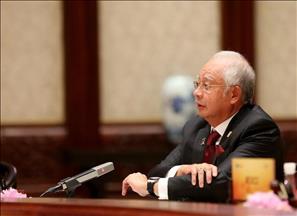
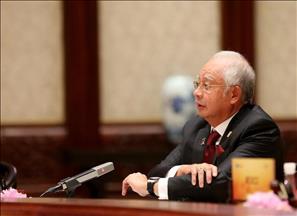
Malaysia's longest serving prime minister Dr. Mahathir Mohamad has added his voice to the anti Trans-Pacific Partnership (TPP) movement, claiming Wednesday that it will affect Malaysian sovereignty.
Mohamad claimed to reporters after an anti-TPP briefing Wednesday that the country's independence is at stake by joining the trade pact, adding that parliament must not approve a proposal to ink Malaysia's involvement Jan. 26.
"A part of our independent rights will be eroded. The need to amend 26 of our existing laws carries this implication," he said.
"When a trade pact requires a country like Malaysia to amend laws at such scale, then it is definitely detrimental to the sovereignty."
Mohamad -- who was premier for 23 years -- added that by approving the TPP, lawmakers must realise that they are submitting to foreign forces and giving up the independence the country fought hard to achieve in 1957.
Malaysia has said it expects it will take two years to amend the 26 laws of the Federal Constitution to meet TPP requirements.
Lawmakers will meet for three days from next Tuesday, after which -- if the initiative is passed -- the country will join the pact, with leaders of the 12 participating countries expected to sign in New Zealand next month.
While the TPP is expected to open up a market with a gross domestic product worth $27.5 trillion to Malaysian companies, the emergence of anti-TPP movements in the country has battered efforts to justify the agreement's benefit to the general public.
The main areas of concern include state-owned enterprises, labor and Bumiputera rights -- privileges granted to ethnic Malays considered economically weaker than the minority ethnic Chinese.
Last week, former senior United Nations official Jomo Kwame Sundaram urged Malaysia to reconsider joining the TPP agreement, warning that it could result in inequality and net job losses among the 12 participating countries.
The TPP was negotiated between the United States, Japan, Mexico, Canada, Australia, Malaysia, Chile, Singapore, Peru, Vietnam, New Zealand and Brunei -- which represent more than 40 percent of the world’s gross domestic product.
It is expected to open up a market populated by 800 million people.
Negotiations for the pact were completed early October in Atlanta, the United States.