22 October 2015•Update: 22 October 2015
WASHINGTON
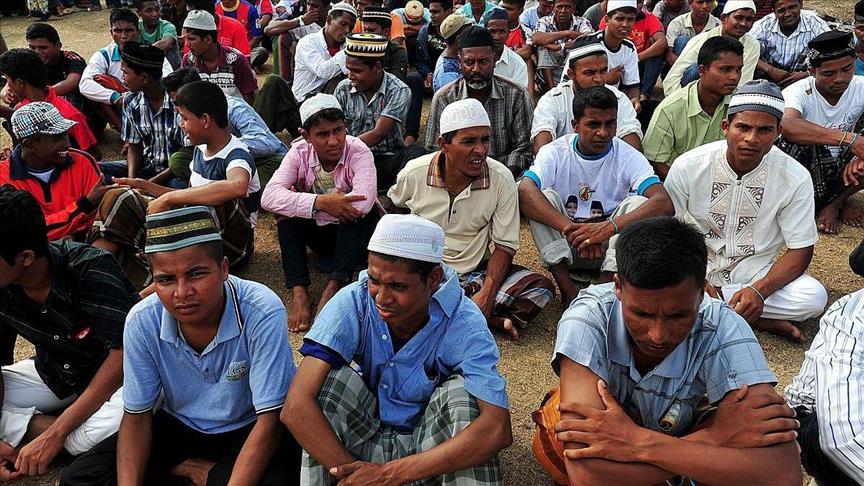
A senior United States official has warned that the spread of hate speech against Myanmar's Rohingya Muslims could lead to violence ahead of November elections.
Testifying before the U.S. House Foreign Affairs Subcommittee on Asia and the Pacific on Wednesday, Assistant Secretary of State Daniel Russel called the upcoming vote an important milestone for Myanmar to shift away from dictatorship, but expressed fears about the way it was being run.
"The politicization of religion and dangerous spread of hate speech could potentially fray community relations further and lead to intercommunal violence, including around election day," he warned.
Russel highlighted U.S. fears for democracy in the country, following moves by Myanmar's ruling government to exclude some Rohingya from the Nov. 8 poll.
"We are disappointed and concerned at the disenfranchisement of approximately 750,000 Rohingya – 'white card' holders who were entitled to vote in previous elections," Russel said.
Earlier this year, authorities withdrew temporary citizenship documents -- the "white cards" -- held by many Rohingya, that also allowed them to vote, and banned some Muslim candidates from taking part.
"We remain concerned over the disqualification of 75 parliamentary candidates, many for failing to meet citizenship and residency requirements, including virtually all Rohingya candidates and most Muslims," Russel added.
He said that the U.S. had made it clear to the Myanmar government and to major political parties that these decisions were "at odds with the democratic principle of inclusivity -- something that is vital in a multi-ethnic, pluralistic union”.
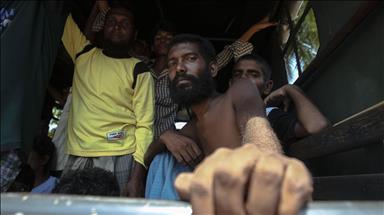
Underlining that over one million ethnic Rohingya face persecution and continue to be denied fundamental rights -- including the right to identify -- Andrews said that fair and credible elections could not take place in the country as long as human rights continued to be violated.
Rohingya, who are linguistically and ethnically distinct from majority Rakhine Buddhists, are officially regarded by the country's rulers as interlopers from neighboring Bangladesh and referred to by most as “Bengalis”.
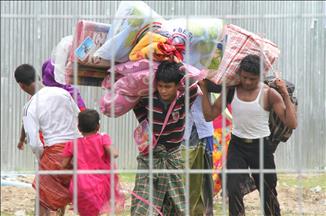
Jonathan Stivers, the assistant administrator from the Bureau for Asia-U.S. Agency for International Development, told the hearing that the U.S. remained deeply concerned about the human rights situation in Rakhine State -- where many Rohingya live in IDP camps -- and the treatment of minorities.
"We encourage the government of Burma [Myanmar] to continue to return internally-displaced persons in Rakhine State to their villages of origin," Stivers said.
Meanwhile, the Republican U.S. Representative Ed Royce described Myanmar's treatment of Rohingya as "abhorrent" and called for the U.S. Treasury to blacklist human rights violators in the country.
November’s poll is expected to be the freest in decades despite mounting doubts about problems with voter lists, the disenfranchisement of many Rohingya and the exclusion of many Muslim candidates.
Hundreds of villages in war-torn ethnic areas will also be left out because of security concerns, the Union Election Commission said earlier this month.
The poll will nonetheless be seen as a test of Myanmar’s move from decades of military dictatorship towards a freer and more democratic society.
Despite U.S.' fears and warnings, Russel did, however, express some hope for Myanmar democracy Wednesday.
"For the first time in memory, no one actually knows who is going to win," he said.