By Charles Newbery
BUENOS AIRES
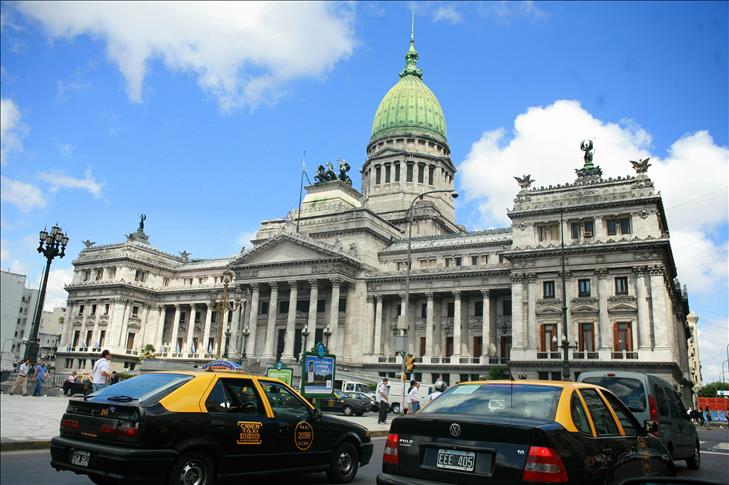
Argentina’s lower house on Thursday approved a government’s plan to offer creditors to swap U.S.-law Argentine bonds for new securities under local jurisdiction that will be paid out of the South American country.
The house approved the bill 134 - 99 with five absentees after 15 hours of debate that ended at nearly 6 a.m. local time. (5 a.m. EDT).
The bill, which gained the nod from the Senate last week, now goes to President Cristina Fernandez de Kirchner to be signed into law.
This is her government’s latest attempt to emerge from a second debt default in 13 years.
Latin America’s third-largest economy failed to make a $539 million interest payment on U.S.-law bonds in July after a U.S. court barred distribution to creditors via the Bank of New York Mellon. The court ruled that the country had to simultaneously make these payments while paying other creditors holding bonds from a 2001 default on $100 billion, the largest in world history at that time.
Negotiations to settle with the plaintiff creditors failed, leading the president to opt for a default on the fear that a settlement could trigger lawsuits from the 93 percent of creditors who accepted 30 cents on the dollar in restructurings of the bonds from the 2001 default. The government warned that such lawsuits could saddle the country with at least $120 billion in claims.
To circumvent the court order and pull out of the second default, the government now plans to offer creditors to exchange U.S.-law bonds for new ones paid out of Banco Nacion, the largest bank in Argentina, or out of France.
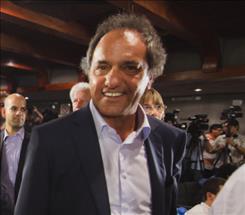
Roberto Feletti, a congressman for the ruling Front for Victory party, said during the televised floor debate that the bill will allow Argentina to get back on track with its debt payments and defend its “autonomy.”
Opponents, however, warned that the swap could push the country into violation of the U.S. court order.
The judge hearing the case, Thomas Griesa, has said the swap would be “illegal” and make the country in contempt of his decision to pay the $1.5 billion in claims to the plaintiff creditors, which Argentina’s government calls vultures.
Pablo Tonelli, a congressman for the conservative Republican Proposal party, said that the only solution for the country to put behind the default is “to comply with the judgment.”
His fellow party congressman Federico Sturzenegger said the swap would distance the country from global financial markets, making it harder to raise financing, attract investment and create jobs.
“In the future, the financing that Argentina is going to need is going to be a lot more expensive and burdensome,” Sturzenegger said.
Argentina hasn’t borrowed on global financial markets since the 2001 default, instead relying on local debt sales, tax collections and international reserves to finance the state and pay the national debt. Economists say, however, that this has spurred monetary expansion as the central bank prints pesos to keep pace with the needs of the executive branch, in turn spurring inflation that is now touching 40 percent annually after averaging 25 percent annual between 2010 and 2013.
In a televised press conference Thursday, Cabinet chief Jorge Capitanich shot down the comments of opposition legislators and the warnings of economists.
“There is a clear division between those that voted to defend the country’s sovereignty and those that voted in favor of the vulture funds,” he said.
www.aa.com.tr/en