Gokhan Ergocun
11 June 2026•Update: 11 June 2026
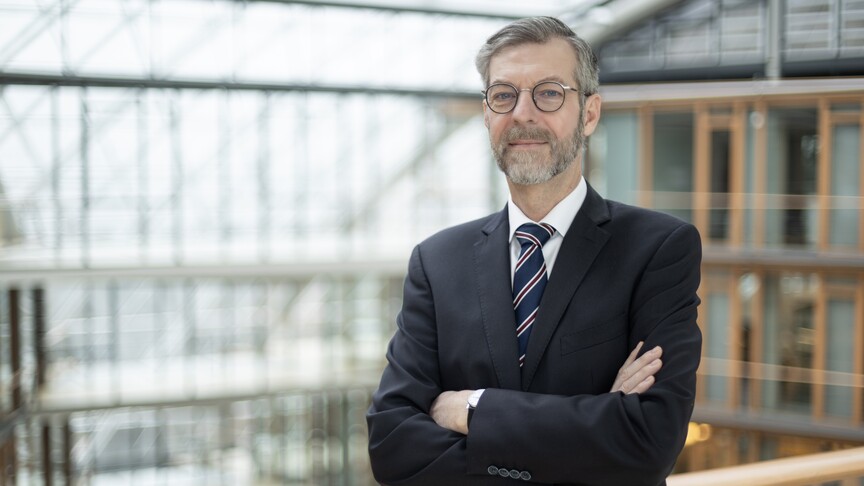
The European Investment Bank (EIB), which has signed a €200 million deal to spur clean energy and energy efficiency projects in Türkiye, could also contribute to the expansion and modernization of railway infrastructure in the country, said Robert de Groot, the financial institution's vice president.
Operating as the lending arm of the EU, the EIB acts as one of the largest multilateral development banks in the world, providing credit and technical support to thousands of projects in more than 160 countries since 1958.
The bank started its operations in Türkiye in 1965 and has provided a total of €30.86 billion ($35.5 billion) in financing for 263 projects in various fields, particularly transport, urban infrastructure, climate action, energy, agriculture, and private sector development.
Prominent agreements between the bank and Türkiye include a €400 million loan agreement that was signed to repair water and wastewater infrastructure in the region affected by the February 2023 earthquakes.
Two separate financing agreements worth €200 million for green transition were signed on Wednesday.
Through these agreements, €100 million will be provided for sustainable industrial investments via the Development and Investment Bank of Türkiye, and €100 million will support the green finance projects of Turkish exporters via Turk Eximbank.
"I think all companies are looking for lower energy consumption and also to maximize the use of renewables," De Groot said during his first official visit to Türkiye. "So, every businessman you talk to, whether it's in this country or anywhere else in Europe, has very much energy efficiency on his mind."
He said he was impressed by the work carried out to restore drinking water services in Hatay, one of the provinces affected by the quakes, and the high technical standards achieved in the reconstruction of the infrastructure. He said the EIB is trying to build a system that can also sustain future earthquakes.
"So, they are truly trying to build back better," De Groot said. "The people have suffered enormously and are still suffering, and that made a great impression. But also their resilience to bring Antakya and the province back to how it was."
De Groot described his visits to Hatay, Ankara, and Istanbul as the start of a new cooperation between the EIB and Türkiye, and expressed hope that a strong project pipeline would be built up quickly.
Railway projects
Noting that their new head of office in Istanbul will work to identify new projects that the EIB could finance, De Groot spoke about future cooperation areas. "I know the government of Türkiye has great plans to expand and modernize the railway infrastructure. This is something we do within the EU too," he said. "So, we have great expertise there, so maybe this is an area where we could be of assistance."
Apart from the activities in Türkiye, De Groot evaluated the EIB's work across the EU, drawing attention to the need for EU countries to increase investments, especially in the field of defense.
He explained that EU leaders have requested the EIB to provide financing support in the field of defense as well.
"The financing has to do with the infrastructure, which has been neglected for decades, and now we have to rebuild our infrastructure to be able to defend ourselves," the vice president said.
"We are investing in research and development for new technologies, we are investing in more manufacturing of defense capabilities in Europe," he said. "We are trying to support small and medium sized enterprises in the supply chain of big European defense companies."