By P Prem Kumar
KUALA LUMPUR
More than 30 years after Turks first started to pay Value-Added Tax (VAT), Malaysians joined the ranks Wednesday, the southeast Asian nation adding its name to the more than 160 countries practicing the broad-based consumption tax regime.
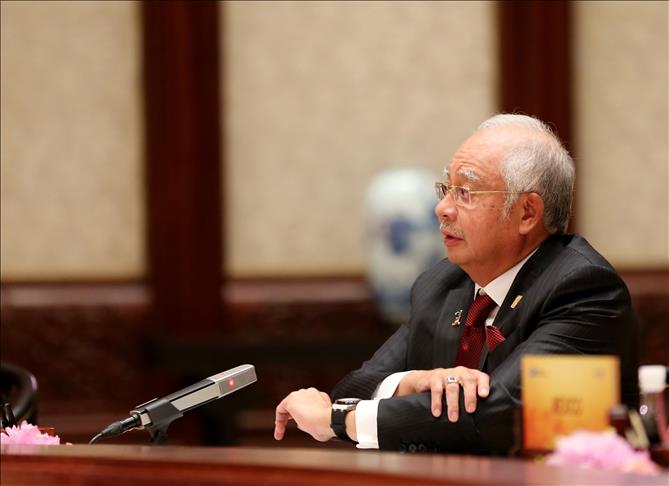
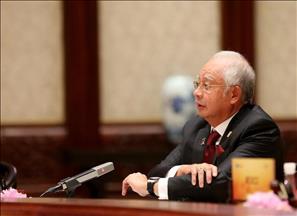
Amid lower global crude oil prices and a weak currency, Prime Minister Najib Razak said he was bringing in VAT - known as Goods and Services Tax in Malaysia - to ease financial constraints.
In the first nine-months of implementation GST - which replaces the colonial sales and services tax - is expected to rake in RM23.2 billion ($6.28 billion) for government coffers.
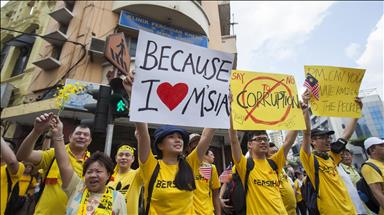
The tax, however, has not been entirely popular. Even as it was being introduced, protesters from both government and opposition called for a postponement, some engaging in a series of hunger strikes and street demonstrations.
Razak and his government have assured that the new tax will not burden the people, yet several senior statesmen - including former premier Dr. Mahathir Mohamad and former finance minister Tengku Razaleigh Hamzah - have demanded that the tax be deferred to a time of brighter global economic prospects.
Razak has said that a major reason for introducing GST is to diversify petroleum-dependent revenue.
National petroleum company Petronas usually contributes more than 30 percent of Malaysia's annual turnover, but it warned this year that revenue would be down due to a plunge in the price of crude oil price.
The announcement saw the Ringgit fall to its lowest against the dollar since the 1998 Asian financial crisis, further pushing the relevance of implementing GST.
A diversified income stream was also vital to repair negative ratings for the country by key global rating agencies, which all downgraded the country's short-term economic prospects.
GST is to be levied and charged in Malaysia on the taxable supply of goods by those with a taxable turnover of over RM500,000 and on the importation of goods and services.
A taxable supply is that which is standard rated or zero-rated. Exempt and out of scope supplies are not taxable supplies.
To mitigate the potential rise in inflation, Razak announced that goods such as fresh food, public transport services, the first 300 kilowatts of residential electricity usage, and around 2,000 types of medicine and all-level education would be exempted from GST.
GST was invented by a French tax official in the 1950s. In many countries it is also known as VAT.
Today, more than 160 nations, including the European Union and Asian countries such as Sri Lanka, Singapore and China practice GST.
Roughly 90 percent of the world's population live in countries with VAT or GST.
Turkey introduced VAT in 1984 for goods, services, petroleum, gas and their transportation.
A symbolic payment of 1 percent is due on wheat products, while for other agreements and bills it is set at 18 percent.
The Ministry of Finance also started to implement 8 percent VAT on some food and other products in 2011.
- Anadolu Agency correspondent Sinan Polat contributed to this story from Ankara