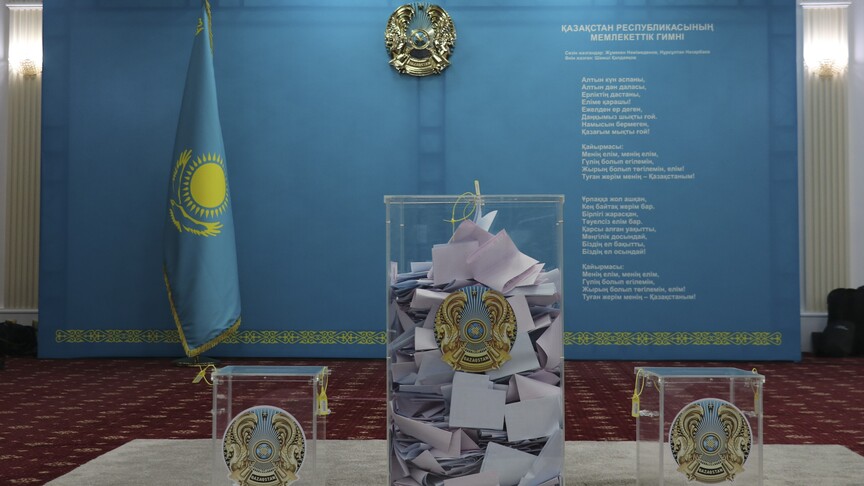
Kazakhstan holds first elections on Sunday for its new 145-seat unicameral legislature, the Kurultai, with 545 candidates from seven political parties competing for five-year terms.
The election marks the first vote under Kazakhstan’s new constitutional system, which replaced the former bicameral parliament with the Kurultai. The new Constitution took effect on July 1, ending the powers of both the Senate and the Mazhilis.
The name "Kurultai" for the new parliament was not chosen by chance — it is a reference to the historical traditions of nomadic steppe democracy. Kazakhstan is geographically located in the steppe zone, which was the cradle of nomadic civilizations, and one of them was predecessor of the current state.
The word "kurultai" has Turkic roots and translates as "assembly." In the past, this was the name given to important congresses among Turkic and Mongolian peoples, where key state matters were decided, rulers were elected, war was declared, peace was concluded, nomad territories and trade routes were distributed, and laws were adopted.
In the Kazakh Khanate, a historical nomadic state in Central Asia, the kurultai was the supreme body of power, representatives of clans, tribes, and zhuzes (a large association of Kazakh clans and tribes) gathered there to discuss and approve the most important decisions.
The return of the term kurultai to the modern constitutional practice of Kazakhstan symbolizes a connection with historical traditions, emphasizes the continuity of national statehood, and reflects a desire to combine contemporary democratic mechanisms with the traditions of steppe democracy.
It reinforces the principle of popular representation and embodies a new model of governance in which the representative body plays a more significant role in making key state decisions.
Under the new electoral system, all 145 Kurultai deputies will be elected by proportional representation from party lists in a single nationwide constituency. In other words, voters will not vote for specific people, but for parties and candidates nominated by them.
If a party gets 30% of the votes, it gets 30% of the seats in parliament. At the same time, the higher the candidate's place on the list, the more likely he is to get into parliament.
Voters will therefore choose a political party rather than an individual candidate.
The seven parties participating in the election are Adilet, the Nationwide Social Democratic Party, the Kazakhstan Green Party Baitaq, the People’s Party of Kazakhstan, Auyl, Ak Zhol and Respublica.
They will appear on the ballot in that order following a Central Election Commission drawing of lots.
The newly formed Adilet has the largest candidate list, with 186 nominees, followed by Respublica with 76, the People’s Party 72, Auyl 69, Ak Zhol 63, Baitaq 47 and the Nationwide Social Democratic Party 33.
Earlier this year, longtime ruling party Amanat voted to dissolve itself into Adilet, making it a central participant in the inaugural vote.
The parties have focused their campaigns on different priorities.
Adilet has emphasized state reform, economic development, digitalization, education, regional development and social protection.
Ak Zhol has campaigned on support for private business, competition and parliamentary accountability, while Auyl has focused on rural development, agriculture and food security.
Respublica, meanwhile, has highlighted entrepreneurship, digital government, infrastructure and economic competitiveness.
The People’s Party has stressed social protection, wages, healthcare, education and support for families and pensioners.
Baitaq has made environmental protection and the transition to a green economy central to its platform, while the Nationwide Social Democratic Party has focused on social justice, reducing inequality and strengthening political competition.
All seven parties complied with statutory requirements concerning the representation of women, young people and people with disabilities.
Across the registered lists, these categories account for 43.9% of all candidates, including 172 women, 74 candidates under 35 and 19 people with disabilities.
The election is also attracting considerable international attention.
The Central Election Commission has accredited international observers from foreign states and international organizations, including representatives of the Organization for Security and Cooperation in Europe (OSCE) and Commonwealth of Independent States (CIS) observation structures.
The CEC has described the level of international interest as "high."
Kazakhstan has also introduced measures aimed at making voting more accessible. Election authorities have prepared special facilities for voters with disabilities, including audio versions of ballots and Braille templates.
The authorities have registered 12,605,788 (12.61 million) voters nationwide and are producing 12,731,847 ballots (12.73 million), including a statutory 1% reserve.
The new parliamentary model is one of the central elements of Kazakhstan’s broader constitutional reform.
The new Constitution defines the Kurultai as the country’s highest representative body exercising legislative power and sets the term of its deputies at five years.
President Kassym-Jomart Tokayev described the transition to the new system as "a major stage in Kazakhstan’s political development," and said the forthcoming election would provide an opportunity to demonstrate "open, honest and competitive politics."
The first session of the newly elected Kurultai is to be convened by the president no later than 30 days after publication of the election results.
news_share_descriptionsubscription_contact