Anadolu Ajansı © 2026


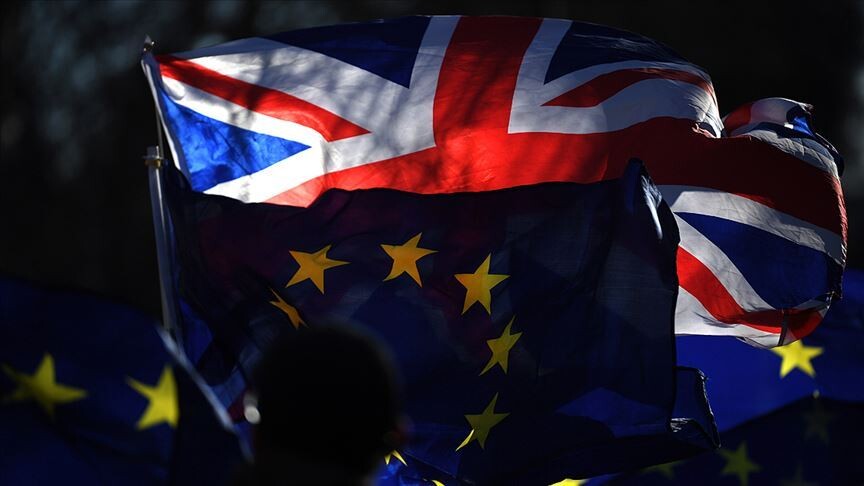
The much-anticipated EU-UK summit on Nov. 20 is set to test both sides’ willingness to strengthen ties after Brexit, with food trade, youth mobility, energy cooperation and carbon markets among the key issues on the agenda.
The meeting comes amid renewed efforts by London and Brussels to reset relations following years of deadlock over trade, migration, regulatory differences and the implementation of post-Brexit arrangements.
Both sides have increasingly signaled an interest in closer cooperation in areas where shared economic and security interests outweigh political differences.
Talks are expected to focus on translating that political momentum into practical agreements, although the scope of any breakthrough remains uncertain.
Ahead of the summit, the British government set out the broad outlines of a package of deals it hopes to reach with the bloc, including a youth experience scheme, a food trade deal and closer cooperation on carbon emissions.
In a factsheet, the government said it was working to finalize deals at Friday’s summit that would benefit British businesses and families.
The government said a youth experience scheme with the EU would create new opportunities for young people to live, study and travel on the continent, while a food and drink trade deal could add up to £5.1 billion ($6.7 billion) a year to the British economy by cutting paperwork for businesses and easing pressure on prices.
The government said an agreement linking the UK and EU emissions trading systems could add up to £3.8 billion ($5 billion) a year to the British economy and protect about £6.5 billion ($8.5 billion) in exports from industries such as steel and aluminum against charges under the EU’s Carbon Border Adjustment Mechanism (CBAM).
Prime Minister Andy Burnham has said the government remains committed to its “red lines” for the remainder of the current Parliament, ruling out rejoining the EU, the customs union or the single market, as well as returning to freedom of movement.
He has said the government is pushing for “deeper cooperation” on key issues including youth mobility, food and drink, and energy to help drive economic growth in the UK.
The British government said figures circulating about the cost of the deals were based on hypothetical scenarios and did not reflect the summit package.
The government also said nothing in the proposed sanitary and phytosanitary (SPS), emissions trading or youth experience deals would require British taxpayers to pay into the EU budget. Both sides would contribute to the cost of administering the agreements, it said.
It added that once fully implemented, the UK-EU SPS deal would remove the vast majority of “Not for EU” labels from UK food products.
The government also said the UK-EU Youth Experience Scheme “will be strictly capped and time-limited,” while freedom of movement was uncapped.
The Times reported earlier this week that the UK could be forced to pay a multimillion-pound penalty if a future government withdrew from a Brexit reset deal.
British and EU negotiators have agreed to a clause in the food and agricultural deal, due to be signed at Friday’s summit, that would require either side to pay compensation if it withdrew, according to the newspaper.
The report described the potential payment by the UK as a multimillion-pound “Farage penalty.”
According to The Times, the clause is designed to address uncertainty about whether the agreement would survive if Reform UK leader Nigel Farage or Conservative Party leader Kemi Badenoch became prime minister.
Farage, who will also travel to Brussels on Friday, has criticized the planned deal, saying Reform UK would scrap it.
UK sources dismissed the notion that it was a “Farage penalty,” saying such a clause was routine in international deals, was written “to work both ways” and would require the EU to compensate the UK if it backed out of the deal.
The Telegraph reported Wednesday that Burnham had agreed to significantly reduce tuition fees for EU students as part of a deal expected to be signed in Brussels on Friday.
In a draft UK statement seen by the British newspaper, UK negotiators offered to either significantly reduce the fees from £38,000 ($50,000) a year or bring them in line with the £9,970 ($13,100) a year paid by UK students.
A previous draft drawn up by EU negotiators said the bloc was demanding “equal treatment” for its students studying in the UK.
Since Brexit, most new EU students in the UK have paid international tuition fees.
European Council President António Costa and European Commission President Ursula von der Leyen will meet with Burnham in Brussels on Friday for the second EU-UK summit.
The EU said the summit would be an opportunity for leaders to demonstrate their commitment to their strategic partnership and to security in Europe and beyond.
At the first EU-UK summit in May 2025, EU and UK leaders agreed to a new strategic partnership that would build on the foundation laid by the Withdrawal Agreement, including the Windsor Framework, and the Trade and Cooperation Agreement.
They welcomed a renewed agenda for cooperation between the UK and the European Commission.
According to the European Council, leaders are expected to review and welcome progress on bilateral cooperation on peace, security and defense, strengthening the EU and UK economies while protecting the environment, and tackling irregular migration.
In the 2016 Brexit referendum, a majority of British voters supported leaving the EU. The UK and EU signed the Withdrawal Agreement on Jan. 24, 2020, and Britain formally left the bloc on Jan. 31, 2020.
The EU-UK relationship is now governed by the Withdrawal Agreement, the Trade and Cooperation Agreement and the more recent agreement on Gibraltar, which has applied provisionally since July 15.
The Withdrawal Agreement set out a phased approach to ensure the UK’s orderly departure from the EU.
news_share_descriptionsubscription_contact

contact_the_ombudsman
is_there_an_error_in_this_story