Melike Pala
13 April 2026•Update: 13 April 2026
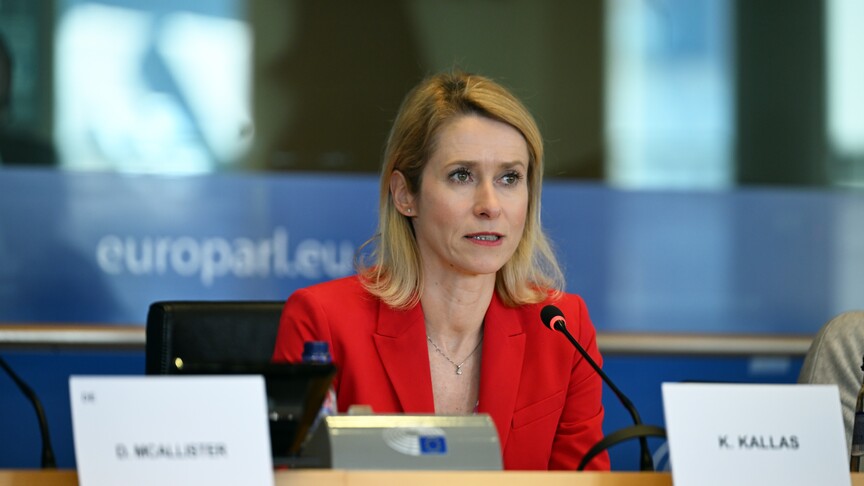
EU foreign policy chief Kaja Kallas on Monday said rising tensions in the Strait of Hormuz underline the urgent need for a "strong international coalition" to safeguard maritime security, calling for renewed global commitment to multilateralism and international law.
Addressing a United Nations Security Council session on EU-UN cooperation in New York, Kallas said maritime routes are increasingly contested, with threats ranging from attacks on shipping lanes to sabotage of undersea infrastructure.
"What is happening today in the Strait of Hormuz is the clearest call yet for a strong international coalition on maritime security. There are many initiatives on the table, but the objectives are simple: safe passage for all shipments via this route," she said.
She warned that global security, economic stability and energy supply are closely tied to maritime safety, noting that regions from the Baltic Sea to the Red Sea and the Indo-Pacific are facing rising tensions.
The EU, she added, will continue to reject any attempts to restrict freedom of navigation in violation of international law, particularly the United Nations Convention on the Law of the Sea.
Kallas also pointed to what she described as the most serious breakdown of international law since World War II, citing two ongoing conflicts: the Russia-Ukraine War and the war in the Middle East.
Call for reform
Kallas defended the importance of global cooperation through the UN, calling it "the only international system that stands for peace" and represents collective global interests.
She acknowledged criticism of the Security Council's effectiveness, noting that record use of veto power in 2024 has hindered its ability to respond to conflicts.
However, she framed the situation as an opportunity for reform, including initiatives to limit veto use in cases of mass atrocities.
"The question now is how to transform the ailing multilateral system into one that works for all," she said.
Kallas voiced support for initiatives aimed at curbing the abuse of veto power, including a proposal led by Liechtenstein to trigger a General Assembly debate when a veto is used, as well as a joint initiative by France and Mexico to limit veto use in cases involving mass atrocities.