Spain approves new housing decrees ahead of November elections
Government revives measures rejected by parliament as major unions back general strike over housing costs and wages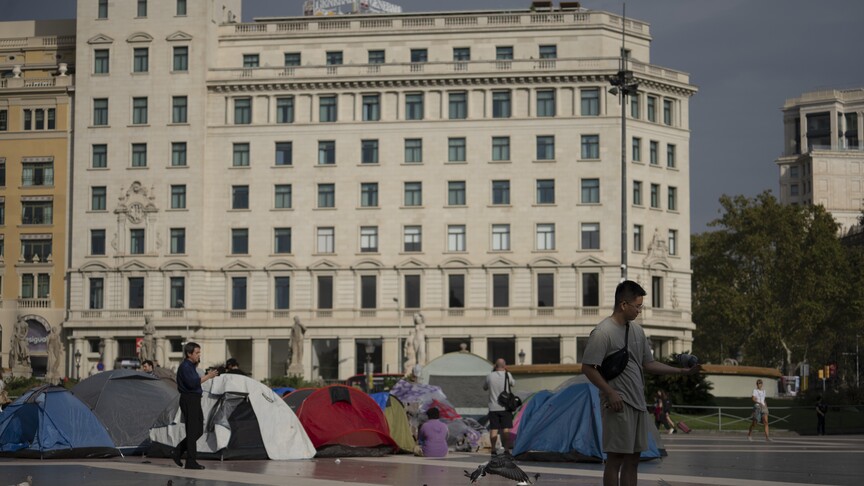
Spain’s government approved two new housing decrees on Tuesday, reviving measures rejected by the parliament last week as housing protests grow ahead of early elections on Nov. 29.
Prime Minister Pedro Sanchez said the package retained the substance of the earlier proposals, with additions to expand affordable housing, support first-time buyers and protect tenants.
“The government will continue governing,” he told a news conference after the Cabinet meeting.
Sanchez announced early elections Monday following the defeat of the previous housing decrees Friday. He urged lawmakers to endorse the revised package, describing it as a matter of “common sense and humanity.”
He argued that speculation had distorted the housing market, preventing it from functioning according to the normal logic of supply and demand and making public intervention necessary.
The package contains 21 measures, including a €10 billion ($11.2 billion) financing program offering interest-free loans of up to €50,000 to help people buy their first home.
It also provides tax deductions for tenants and incentives for small landlords offering affordable rents.
To increase supply, Sanchez announced €280 million in guarantees to support housing construction and €400 million for social housing providers. Public housing company Casa 47 will acquire thousands of properties from Spain’s social security system for affordable housing.
Tenants current on rent payments would be able to seek lease extensions of up to two years. Other provisions include limits on rent increases, protections for vulnerable residents without alternative accommodation and rules governing when landlords can recover their properties.
The measures would also regulate temporary and room rentals, restrict purchases by investment funds and require tourist apartments to be taxed as businesses.
Sanchez acknowledged insufficient support for the “more ambitious” automatic lease-renewal policy in last week’s decrees, which would have required landlords to compensate tenants if they declined to renew contracts without the required justifications.
Although parliament has been dissolved, the government remains in office and can approve emergency decree-laws. These must be endorsed within 30 days by the lower house’s Permanent Deputation, which exercises certain parliamentary powers between legislatures.
Its composition offers a possible majority without the Catalan separatist party Junts, whose opposition helped defeat the previous measures.
The Basque Nationalist Party (PNV) could instead prove decisive. It is negotiating safeguards for small landlords and vulnerable residents but has not committed to supporting the new texts.
Separately, Spain’s two largest unions, UGT and CCOO, agreed Monday to call a 24-hour general strike this autumn over wages and housing affordability.
The agreement requires approval by their governing bodies, and a date remains to be set in consultation with tenants’ groups and other organizations.
Demonstrations have continued across Spain, alongside a protest camp in Madrid’s Puerta del Sol square, following the eviction of 87-year-old Maricarmen Abascal from her home.
The dispute has placed housing at the center of the election campaign as Sanchez seeks a stronger parliamentary majority.