Anadolu Ajansı © 2026


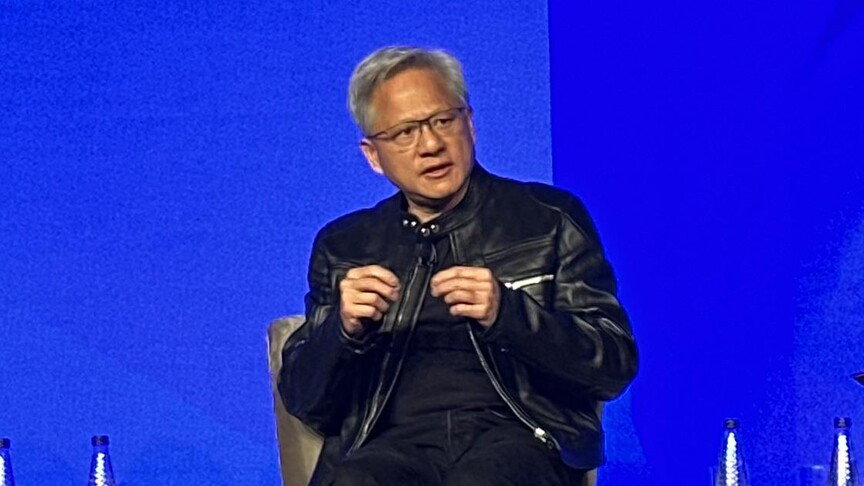
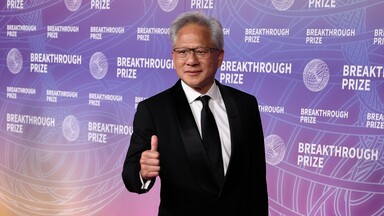
Jensen Huang, the co-founder and longtime chief executive of US chipmaker NVIDIA, resigned on Nov. 12 following weeks of scrutiny over his reported relationship with a businesswoman suspected by US intelligence officials of having ties to Chinese intelligence, raising concerns about potential national security risks.
Huang, 63, who was born in Taiwan and moved to the US as a child, co-founded NVIDIA in 1993. Under his leadership, the company became a leading supplier of advanced artificial intelligence chips, technology at the center of growing competition between Washington and Beijing.
The controversy centered on Huang's reported relationship with Alice Huang, a businesswoman linked to a company that had purchased billions of dollars worth of NVIDIA equipment. US media reported that intelligence officials suspected her of having connections to China's Ministry of State Security, raising questions about possible foreign intelligence access to the leadership of one of America's most strategically important technology companies.
The allegations prompted congressional scrutiny and an independent investigation by NVIDIA's board. Huang subsequently acknowledged being unfaithful to his wife but did not identify the person involved.
NVIDIA announced his immediate departure on Nov. 12, naming Chief Financial Officer Colette Kress interim CEO. The company did not give a reason for his resignation or directly link it to the intelligence allegations.
According to corporate records reviewed by CBS News, Singapore-based 7Road International was acquired by Huang Le Limited in March 2023 and renamed Megaspeed International.
Alice Huang became Megaspeed's managing director before leaving the company later that year.
Jensen Huang and Alice Huang were photographed together at an event in Taiwan in 2024.
Their relationship later came under scrutiny after US media reported that intelligence officials suspected Alice Huang of having links to China's Ministry of State Security.
Megaspeed came under investigation in Singapore over alleged breaches of local laws, while US authorities examined whether the company had helped Chinese firms obtain advanced NVIDIA processors in violation of US export controls.
CBS News reported on Nov. 9, citing two law enforcement sources, that the US Justice Department's National Security Division was investigating Megaspeed over possible violations of export restrictions on advanced AI chips.
The New York Times reported that Megaspeed had purchased nearly $5 billion worth of NVIDIA AI chips and advanced hardware over three years.
Megaspeed denied wrongdoing and said it had undergone inspections by relevant authorities, maintaining that it was committed to complying with US export-control laws.
The Wall Street Journal reported that US officials concluded in 2025 that Alice Huang, then an executive at Megaspeed, was sharing information with Chinese authorities while working with NVIDIA on data-center projects in Asia.
The New York Times separately reported that senior US officials briefed President Donald Trump on intelligence concerning Alice Huang and her reported relationship with the NVIDIA chief.
A classified memo reportedly circulated among senior Trump administration officials in spring 2026, warning that Alice Huang had been recruited by China's Ministry of State Security, according to The New York Times.
US short-selling firm Culper Research published a report raising questions about NVIDIA's business ties to Megaspeed and Jensen Huang's interactions with Alice Huang, citing photographs of the two at business events.
The report drew attention to the relationship months before the allegations became the subject of wider public scrutiny.
The New York Times reported that US officials believed Huang had developed a close personal relationship with Alice Huang, who was suspected of being connected to Chinese intelligence.
NVIDIA said at the time that Huang's interactions with her were part of his ordinary work with customer executives.
Three Republican House committee chairmen requested a closed-door briefing with Huang concerning national security risks, his interactions with Alice Huang and NVIDIA's safeguards against foreign threats.
The request, sent on Nov. 4 and published the following day, sought a briefing on Nov. 18.
The New York Times reported, citing US intelligence assessments, that Alice Huang had allegedly been recruited by China's Ministry of State Security to gather information on Jensen Huang and NVIDIA.
China rejected the espionage allegations, describing them as groundless speculation.
Huang issued a message to NVIDIA employees, acknowledging that he had been unfaithful to his wife and apologizing to his family, colleagues, the company's board, partners and shareholders.
"I was unfaithful to my wife. My actions hurt her and our children. There is no excuse for what I did. I am deeply sorry," he wrote.
He did not identify the person involved in the relationship.
Huang also addressed national security concerns raised in news reports, saying NVIDIA's board had initiated an independent investigation and that he would cooperate fully.
The board said a committee of independent directors, assisted by outside counsel, would oversee the inquiry.
It added that it had no reason to believe that US national security or NVIDIA's secrets had been compromised, but pledged to examine all available information.
An NVIDIA shareholder filed a proposed class-action lawsuit alleging that the company and its leadership had misled investors by failing to disclose information related to Huang's reported relationship and national security concerns.
On Nov. 10, NVIDIA's independent directors announced they had retained former acting US Attorney Joon H. Kim and the law firm Wachtell, Lipton, Rosen & Katz to conduct the investigation.
The Wall Street Journal reported that NVIDIA's board was preparing to remove Huang, adding to uncertainty surrounding the company's leadership.
NVIDIA's shares fell more than 8% in premarket trading on Nov. 12, threatening to erase approximately $590 billion from the company's market value if the losses persisted, according to The Wall Street Journal.
NVIDIA announced that Huang had resigned as president, chief executive officer and a member of the board, effective immediately.
The company appointed Chief Financial Officer Colette Kress as interim CEO, with her continuing in the finance role until a permanent successor is named.
NVIDIA said it would consider both internal and external candidates for the position.
The board also appointed Harvey C. Jones as its first-ever chair.
The company's announcement thanked Huang for his contributions but did not state a reason for his resignation or explicitly link the decision to the investigations and allegations.
Huang's departure ends a 33-year period at the helm of a company he helped build into a central supplier for the global artificial intelligence industry.
news_share_descriptionsubscription_contact

contact_the_ombudsman
is_there_an_error_in_this_story