By Halima Athumani
KAMPALA, Uganda
Cancer patients in Uganda may have to wait for as long as two years to get radiotherapy treatment.
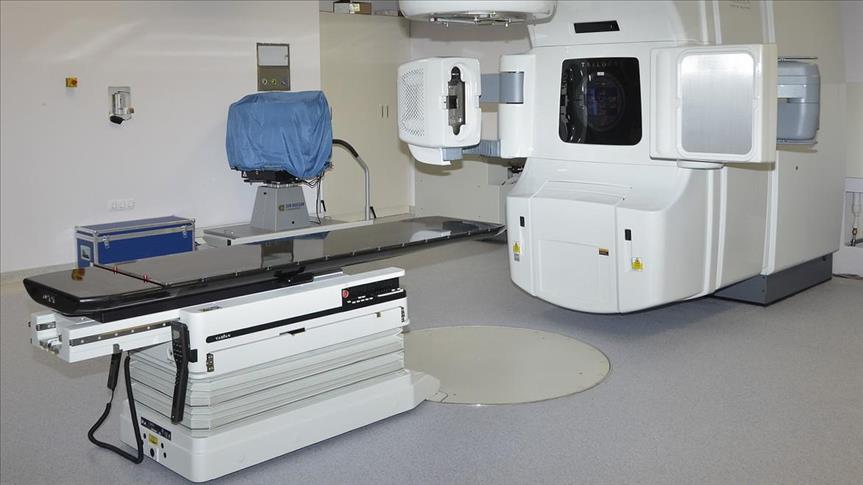
Ugandans were alarmed on Friday to news that the only working radiotherapy machine in the country – serving 75 percent of its 200,000 cancer patients – had broken down, this time for good.
The Cobalt-60 machine was donated to Mulago National Referral Hospital in 1995 by the International Atomic Energy Agency (IAEA). Cobalt, the machine’s power source, should be replaced every five years because of decay.
A senior official at the cancer institute, speaking on condition of anonymity, tells Anadolu Agency: “We last made the cobalt change in 2002 and the next change was supposed to be between 2007 and 2008 but we didn’t.”
Officials say they “inherited” the 21-year-old machine that was now being held together by tape from old management.
The Uganda Cancer Institute took over the radiotherapy unit in Sep. 2014 and was given autonomy from the wider hospital.
When contacted, Permanent Secretary at the Ministry of Health Asuman Lukwago explains to Anadolu Agency: “The cobalt replacement did not take place in 2008 because we realized we needed to purchase a new machine.”
Lukwago reveals: “When we evaluated the cost for a new bunker, it was too expensive. Use of the old bunker meant we were bound to have radiation leakages that would have caused more danger to the population.”
However, even though the ministry was aware the machine had needed replacement since 2002, a look at the Ministerial Policy budget statements over the years shows the government only took steps to pay money to the IAEA to replace the Cobalt-60 machine at a cost of 2.2 billion shillings [$66,000] in the 2012/2013 financial year.
Since then the Uganda Cancer Institute has not been allocated money enough to even put down a deposit for a new radiotherapy device.
On Saturday last week, the Uganda Cancer Institute for the first time made public a receipt from the IAEA’s then Acting Section Head of Finance and Accounting, Helen Brunner De Castris.
She acknowledges receipt of 325,297 euros [$371,000] which was deposited in an IAEA account with Unicredit Bank Austria, Vienna on 22 May 2013.
“This amount represents voluntary contribution from the government of Uganda through the Mulago Hospital complex for the purchase of a cobalt 60 tele-therapy machine under the IAEA technical cooperation project expanding the radiotherapy service,” reads the receipt.
Lukwago of the Health Ministry explains that: “We are now working on our budget together with the Ministry of Finance to support the new machine, but the understanding was that there could be alternative methods to treat patients as they wait.”
The machine has been serving 100 cancer patients who need exposure to radioactive waves on a daily basis. Patients may need radiotherapy for as long as between 5-6 weeks depending on their diagnosis and the extent of the disease.
Elioda Tumwesigye, Uganda’s Minister of Health, acknowledges cancer is becoming a challenge. Speaking at a news conference, he told reporters: “Out of the more than 200,000 cases per year, 60,000 are incident cases.”
He added: “The machine has been serving an average of 24,465 patients annually, so the breakdown will certainly reduce our capacity for delivery of cancer treatment by about 20 percent.”
Statistics show each year about 46,970 deaths are registered in Uganda due to cancer, the risk increasing with age. The Ministry of Health estimates that over the next five years there will be about 300,000 cancer cases.
Dr. Orem Jackson, the head of the Cancer Institute, insists: “Treatment has not stopped; we still have capacity for cancer treatment in the country.”
He explains that the majority of patients that seek treatment are normally at advanced cancer stages: “The best we can do for them is palliation, which is symptom control and not cure.
“What we are doing now is maximizing the other capacity to cover the gap left by the broken machine.”
However, a senior medical physicist at the radiotherapy unit tells Anadolu Agency, even with the alternative modalities in place such as surgery and chemotherapy “the response will not be as good because treatment can fail, considering it varies from person to person and type of cancer.”
While cancer treatment has been free not just for Ugandans but also citizens of Burundi, Kenya, the Democratic Republic of Congo and Rwanda, the only option now is for a patient to travel to Nairobi, Kenya where treatment is costly.
Dr. Jackson now reveals: “We should have a new bunker if everything is in place, including financing, within a year after ground breaking in May. If we are to have this treatment in place, we cannot rush that process because one mistake can discredit the entire process.”
According to Dr. Jackson it took two years to come up with an IAEA-approved design for a bunker and when they were finally given a road map “the equipment procurement process and construction have not moved together because of the complexities involved”.
While the minister and head of the Uganda Cancer Institute says the bunker can be built within six months to a year, a source tells Anadolu Agency that one of the guidelines issued by the IAEA indicates the minimum period to have a bunker built is two years.