By Hassan Isilow
JOHANNESBURG
Like many refugees, when Jele Abdi arrived in South Africa from war-torn Somalia he thought the bulk of his troubles lay behind him.
When he finally scraped enough money together to open his own store in a township outside Johannesburg after three years of hard work he thanked his good fortune and the chance he had to carve out a life for himself and his family.
However, those dreams were vanquished in a few hours one night as a mob looted his shop.
His was just one of many foreign-owned stores ransacked in Katlehong township, 35 kilometers (22 miles) east of Johannesburg, in one of the latest episodes of xenophobia that have plagued post-Apartheid South Africa.
“I watched helpless as the mob looted and destroyed what I had worked so hard to build,” Jele, 31, told Anadolu Agency.
The March 29 rampage in Katlehong was in response to the shooting of alleged shoplifter by a foreign store owner and is part of a series of incidents that have led to scores of deaths, mostly of migrants.
It aroused little condemnation on the part of ordinary South Africans.
“South Africans seem to disassociate themselves from commenting on issues of xenophobia yet it is intolerable, just as racisms is,” Mienke Mari Steytler, head of public affairs at the South African Institute of Race Relations, told Anadolu Agency.
While the country’s modern history is steeped in issues of racism -- a history it was able to break free from thanks, in part, to neighboring states -- discrimination against migrants from other parts of Africa often passes unremarked, she added.
It is among the poor and marginalized of South Africa’s townships, where the effects of Apartheid are still clear, that such discrimination is closest to the surface. Here, accusations of foreigners “stealing” jobs, housing and opportunities are frequently heard.
“People are unhappy with the government’s failure to create jobs and end inequality,” Steytler said. “Unfortunately they turn their anger by attacking African immigrants.”
All too often, this disaffection has erupted into violence.
Xenophobic attacks
In May 2008, at least 62 people lost their lives and hundreds were injured in cross-country riots that saw mobs initially target the homes of migrants from Mozambique, Malawi and Zimbabwe.
Seven years later, at least seven people were killed in anti-foreigner violence that began in Durban but soon spread to Johannesburg. The rioting was sparked by claims migrants had taken jobs from native South Africans, were responsible for a rise in crime and were a burden on social services.
Abdeslam Habiballah Ahmed, chairman of the Migrant Community Board of South Africa, said incidents of xenophobic violence have fallen slightly in recent years.
“My organization has been working with the government and other migrant formations to sensitize local communities to stop this hatred,” he said.
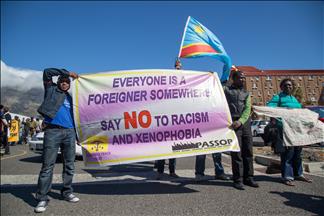
Amir Sheikh, chairman of the Somali Community Board, appealed to South Africans to condemn xenophobia as they would racism. “Let’s not have selective condemnation,” he said. “We cannot condemn racism and be silent when xenophobic violence happens.”
The board conducts regular visits to townships to raise awareness on integration. “We have dispelled misconceptions that most migrants are illegal in the country and participate in crime, which is not true,” Sheikh said.
With the fall of Apartheid in 1994, migrants from across the continent flocked to South Africa to escape war in their home countries or to seek better opportunities. According to some estimates, more than 3 million migrants are living in the country, many of them operating small businesses in townships.
For those for whom South Africa represented an ideal for black Africans, xenophobia has proved a shock.
“I regret the day I left my country to come to South Africa,” Sharimane Abdi Hassan, 41, from Somalia, told Anadolu Agency. “I thought I would be safe and build a future here.”
The father-of-four’s two shops in Soweto township were looted in 2014.
Street vendor Luckyi Mawundi, originally from Malawi, also wants to return home at the first opportunity. “I no longer enjoy my stay here because I am always worried I could be attacked.”
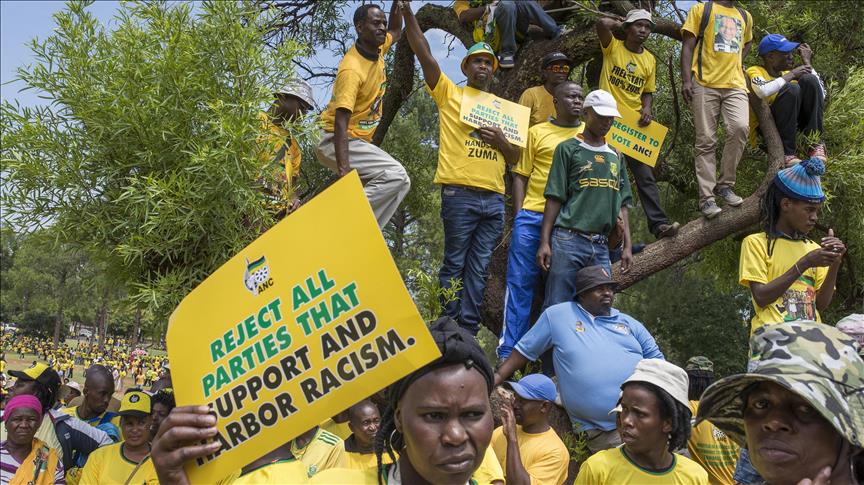
President Jacob Zuma, who lived in exile during the struggle against Apartheid, has been vociferous in fighting xenophobia. “Xenophobia has no place in South Africa and will not be tolerated,” he told a rally on Human Rights Day last month.
For Jele, who is worried about how to support his family in southern Somalia now his shop in Katlehong lies in ruins, it is a message he hopes his neighbors are listening to as he plans to rebuild his business.