Rania Abushamala
21 November 2026•Update: 21 November 2026
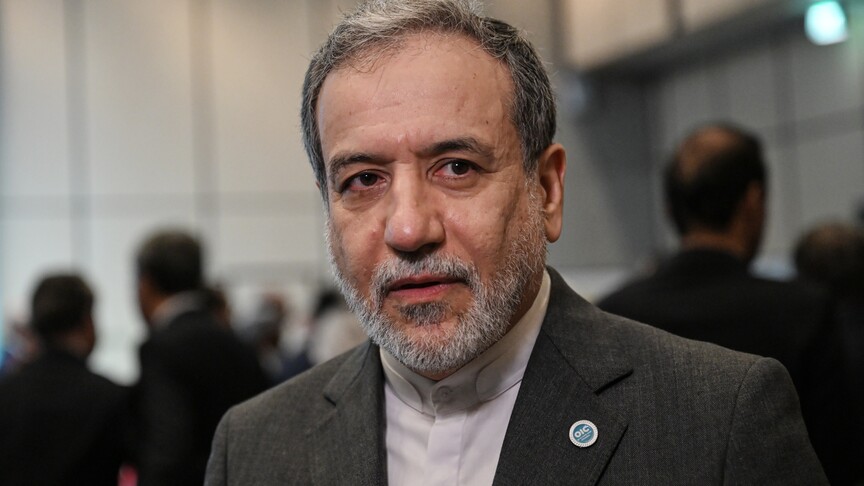
Iranian Foreign Minister Abbas Araghchi said Saturday that reopening the Strait of Hormuz was “not difficult” if the United States accepted Tehran’s conditions, but the waterway would remain closed until they were met.
“Reopening the Strait of Hormuz is not difficult. The United States only needs to accept Iran’s reasonable conditions, which are in line with international law,” Araghchi said at a ceremony marking Oman’s National Day, the semi-official Tasnim news agency reported.
He said the current situation could be resolved only if Washington “acknowledged its mistakes and fulfilled its previous commitments.” He added that past wars had shown regional security must come from within the region and that talks on the issue had begun.
Responding to a Tasnim question about a Qatari delegation’s visit to Tehran, Araghchi said such visits were routine and that mediators between Iran and the US regularly traveled to relay ideas and proposals.
“Our position is clear. As long as Iran’s demands are not met, reopening the Strait of Hormuz is not on the agenda,” he said. “We have always said we are ready for talks, just as we are ready to defend ourselves.”
Araghchi called the US blockade of Iran “completely illegal” and said there was considerable speculation about it. He urged giving regional talks and mediation efforts time and said he hoped for “a rational way to lift the blockade.”
He praised Oman’s efforts to ease regional tensions and said the countries’ close ties were based on mutual respect. Araghchi said the latest round of consultations took place four days earlier, when he met Oman’s sultan and foreign minister. He said close consultations would continue given the sensitive situation in the region.
Iran moved to close the strait again on July 12, four days after the US resumed attacks on the country.
Araghchi also said he had requested an emergency meeting of foreign ministers from the Organization of Islamic Cooperation (OIC) to discuss the situation in Gaza.
He described what was happening there as “a kind of silent genocide” and accused Israel of continuing to kill Palestinians “without pause.”
Separately, Iranian Deputy Foreign Minister Kazem Gharibabadi said a Qatari delegation arrived in Tehran on Friday evening and held two hours of talks.
He said talks with Qatar were continuing online and in person to explore an opening for diplomacy. Qatar did not immediately comment.