Mohammad Sio
09 September 2026•Update: 09 September 2026
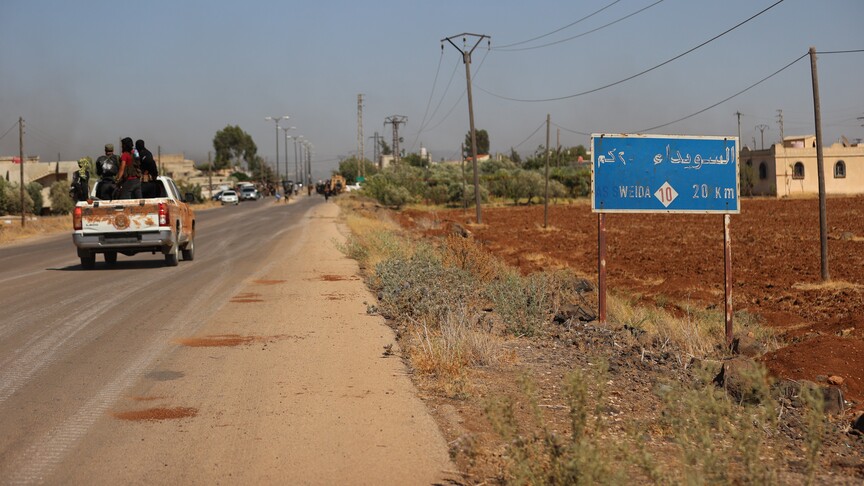
Jordan and Syria discussed efforts to implement a joint Jordanian-Syrian-US roadmap Wednesday aimed at resolving the crisis in southern Syria’s Suwayda province.
The talks came during a visit by Jordanian Foreign Minister Ayman Safadi to Damascus, where he met Syrian President Ahmad al-Sharaa and held extensive talks with his Syrian counterpart. Asaad al-Shaibani, according to a joint statement.
The roadmap, adopted Sept. 16, 2025, by Jordan, Syria and the US, includes security, humanitarian, service and judicial measures, as well as community reconciliation and a joint mechanism to monitor implementation, based on Syria’s territorial unity, state sovereignty and the rights of all citizens.
US envoy Tom Barrack expressed concern Saturday about renewed tensions in Suwayda, urging all sides to exercise restraint and pursue dialogue.
“We are dismayed by the renewed escalation in Suwayda,” Barrack wrote on US social media company X.
Noting a trilateral roadmap for peace signed nearly a year ago with Shaibani and Safadi, Barrack said the plan sought “the dignified reintegration of the province into Syria, with the full rights and the full obligations of citizenship for its Druze community.”
“That path remains the only one that leads anywhere but back to grief,” he said.
“Where governance is absent, gangs fill the void,” he said, citing Atef Hunaidi, whom he said had been “arbitrarily detained and driven from his home.”
Barrack added that his team was in contact with Hunaidi and others affected by “intracommunal violence.”
A ceasefire has been in place in Suwayda since July 2025, after fighting between Bedouin tribes and Druze fighters left hundreds dead and wounded. Groups affiliated with Druze spiritual leader Hikmat al-Hijri have been accused of repeatedly violating the arrangement, while Damascus has maintained the ceasefire and facilitated evacuations and humanitarian assistance.
Following the fall of the Bashar al-Assad regime in December 2024, authorities have sought to restore security and extend state authority nationwide, while several armed groups have continued to operate independently.