15 November 2015•Update: 15 November 2015
KABUL, Afghanistan
A leading rights watchdog on Sunday voiced its concern over a recent amendment to Afghanistan’s Criminal Procedure Code that will allow suspects to be held indefinitely under certain circumstances.
According to New York-based Human Rights Watch (HRW), the amendment allows the authorities to hold suspects indefinitely without trial while also denying them access to legal advice -- both of which run counter to the country’s constitution.
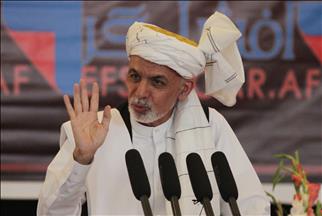
"Given President Ashraf Ghani’s sharp criticisms of U.S. practices at Guantanamo, it is incomprehensible why he would want to bring indefinite detention without trial to Afghanistan," said Patricia Gossman, HRW’s senior Afghanistan researcher.
"Afghanistan needs to take steps to address terrorism and protect public safety, but not by denying Afghans the right to a fair trial," Gossman added.
In September, Ghani issued a presidential decree modifying the criminal code to allow the authorities to hold anyone suspected of having committed "crimes against internal or external security" -- or who were "likely to commit such a crime" -- for renewable one-year periods.
The decree, however, failed to specify whether detainees would enjoy the right to legal counsel, to examine the evidence brought against them, or to challenge that evidence in a fair proceeding.
'Special place'
Detainees, Ghani’s decree states, are to be "kept in a special place under the supervision of the prosecutor, separate from detention centers and prisons".
The government, however, has yet to say where exactly this "special place" would be.
HRW, for its part, warned that the prosecution of suspects held under the law -- outside the regular criminal justice system and without any provision for their access to legal counsel -- raised the risk of torture or other ill-treatment.
The Judicial Committee of the Wolesi Jirga in Afghanistan’s lower house of parliament has been considering Ghani’s decree since early October.
Parliament has the power to veto the decree, but if it does nothing, the decree will remain law.
The committee can call for a hearing to examine the decree, to which it can invite legal experts to testify before making a decision to reject or amend it.
The one-year detention periods, meanwhile, can be renewed indefinitely with the approval of the country’s Supreme Court.
"This presidential decree attempts to end-run the legal system and could put detainees at risk of grievous, unlawful abuses," said HRW’s Gossman, going on to point out that torture remained "a longstanding problem in Afghan detention facilities".
Afghan officials, for their part, believe the measures are necessary to curb a recent upsurge in militancy and to prevent militants from exploiting loopholes in the country’s judicial system.