Ekip
04 March 2016•Update: 04 March 2016
By Ayman Jamali
TUNIS
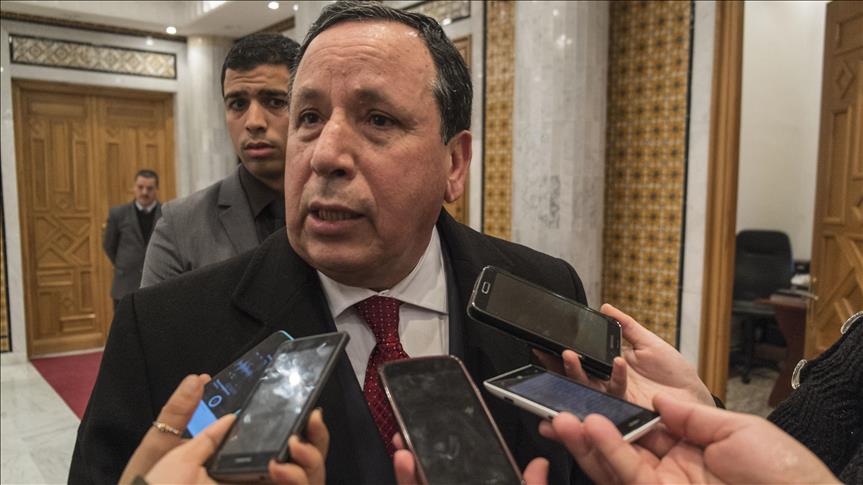
The Tunisian Foreign Ministry on Friday said a collective declaration issued earlier this week by Arab interior ministers did not designate Lebanon’s Hezbollah movement as a "terrorist" group.
"The statement issued at the 33rd session of the Council of Arab Interior Ministers… did not classify Hezbollah as a terrorist organization," the ministry said in a statement.
It went on to stress that Tunisia, which hosted the council session on Wednesday, "holds non-interference in other state’s internal affairs as a pillar of its foreign policy".
A declaration issued at the end of Wednesday’s council session condemned what it described as Hezbollah’s "dangerous actions", which, it asserted, served to "destabilize security and social harmony in some Arab states".
Notably, only hours earlier, the six-nation Gulf Cooperation Council (GCC) had formally designated Hezbollah a "terrorist" group, similarly describing the Shia group’s actions in Syria, Yemen and Iraq as a "threat to Arab national security".
The anti-Hezbollah positions voiced at the Tunis-hosted ministers’ meeting, however, were met with a storm of criticism from Tunisian political parties and groups.
On Thursday, the Tunisian General Labor Union voiced its "rejection" of the decision, describing the move as "submission to Zionist blackmail and a blow against the [anti-Israel] resistance".
Mohamed al-Fadel Mahfouz, for his part, head of the Tunisian Lawyers Syndicate, criticized the Tunisian government’s support for the council’s position, which, he said, "doesn’t reflect the values of the Tunisian people or their support for national resistance".
The Popular Front, a coalition of leftist parties in Tunisia’s parliament, along with the People's Movement Party, also condemned the government’s support for the council’s position on Hezbollah.
And in a joint statement, three Tunisian civil society organizations likewise denounced the assertions made at the ministers’ meeting, saying they "only serve the Gulf regimes that are trying to divide the region along sectarian [i.e., Sunni vs. Shia] lines".