Yuksel Serdar Oguz
05 July 2013•Update: 03 February 2017
WASHINGTON
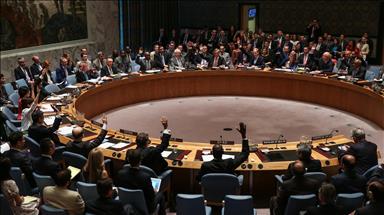
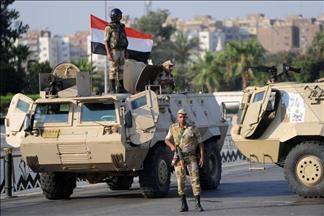
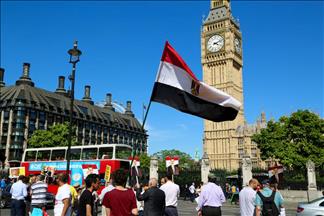
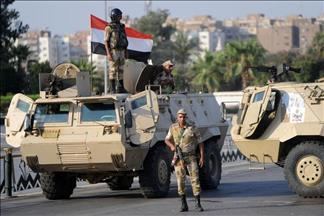
After the military coup in Egypt American and English think tanks examined the possible developments and the country's future.
Michele Dunne from the Atlantic Council said that the events in Egypt were "a military coup against a leader which was in a democratic way, even he does not take democratic steps" and underlined that the US had to name this event as a "military coup". Dunne noted that the US had to cut its military aid to Egypt until a democratic civil government came to power.
Dunne explained that American were too late to see the crisis in Egypt and because of were not recognized by all parties. She added that the Obama administration avoided the "undemocratic actions" of the Morsi government and noted that the US did not present an important economic or effort to turn back to democracy.
The executive director of the Washington Institute for Near East Policy Robert Satloff argued in an article that the Egyptian army’s removal of President Mohamed Morsi gave the Obama administration that rarest of opportunities in foreign policy: a second chance.
Satloff said, "No one should revel in the deposition of an elected leader by a country’s military, but this is not a coup in the traditional sense and does not merit a suspension of U.S. assistance our law prescribes. Indeed, the army almost surely prevented a bloodbath that would have scarred Egypt for decades. Inaction, not intervention, would have been criminal."
Tamara Cofman Wittes from the Saban Center for Middle East Policy at Brookings explained, "Even if this military action to depose the elected president was a response to popular demand, that doesn't mean it wasn't a coup d'etat. It's possible for a military coup to advance democratic development -- but it's rare, and the bar is pretty high", and added that General el-Sisi's roadmap had no dates attached a return to democratic rule.
Wittes pointed out, "Morsi governed in an exclusionary manner that derailed Egypt's nascent democratic transition -- the new transitional authority must not make the same mistake. The Muslim Brotherhood did well in elections partly because it captured years of pent-up protest votes -- but there is also some significant segment of the public who feel that the Brotherhood best represents them politically." She highlighted that the police must be depoliticized and put firmly back under neutral civilian control.
The Middle East and North Africa expert of the English think tank Chatham House Jon Marks analyzed, "The Muslim Brotherhood will regroup, with its militants now intensely wary of dealing with the military. Voters may doubt their voice counts at all. Dissent may find new expression in violence, in the country’s major urban areas, as well as pressure points such as Sinai."
Marks noted that the name of former League of Arab State secretary-general and foreign minister Amr Moussa was on several lips. "Announcing the coup, General Sisi was flanked by a range of political leaders, including Nobel Prize-winning Mohammed El Baradei and prominent Salafist Galal Morra. There is speculation that the Salafist Nour Party could provide an ultra-conservative Islamist to a future coalition," he added.
Another expert of the Chatham House, Jane Kinninmont highlighted that Morsi was an elected president and his supporters would not stop against the military intervention.