By Mainul Islam Khan
DHAKA, Bangladesh
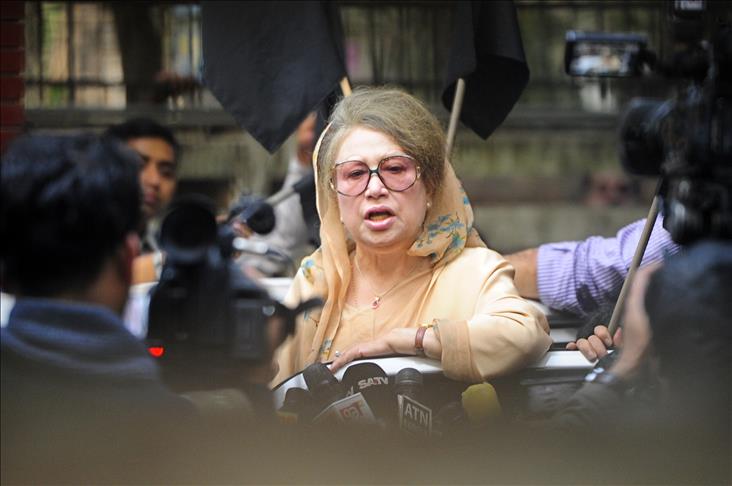
Bangladesh's main opposition leader denied on Monday that her supporters are responsible for more than two weeks of political violence that has killed at least 25 people.
The head of the Bangladesh Nationalist Party Khaleda Zia said the ongoing crisis, which began on Jan. 5, should be resolved politically.
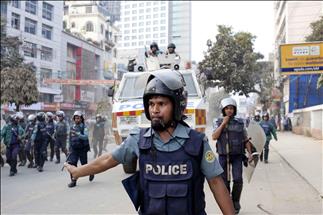
Zia left her office in the capital, Dhaka, for the first time since Jan. 4, when hundreds of police formed a cordon around her compound. She claimed that the police were detaining her, though the government had always maintained that Zia was free to leave.
"It's not BNP but the ruling Awami League that is responsible for the violence across country," Zia said after a meeting with her party's standing committee.
She also announced that a rolling nationwide transport blockade, now in its third week, will continue.
The blockade was announced on Jan. 5 when Zia, according to her claims, was prevented from attending rallies to mark a year since controversial 2014 elections, which her party boycotted over purported fears over electoral fraud.
Her party also called a 36-hour strike, known as a hartal, in the area around and including the city of Chittagong, which is considered the country's business capital due to a busy sea port that processes billions of dollars of shipments.
The transport blockade has already hit the country's economy with millions of dollars of daily losses.
A leader of the ruling Awami League party Hassan Mahmud told press that Zia had not been arrested but claimed that, if people wanted, she could be arrested for widespread incidents of arson, mainly targeted against buses, across the country.
Another Awami League leader, Mahbubul Alam Hanif, said in a public speech on Monday that the political turmoil would be solved within a week.
Pockets of violence have spread throughout the country; at least 25 people have been killed while buses defying the opposition blockade have been set aflame and a senior Bangladesh Nationalist party politician was shot in Dhaka.
The U.N. joined the growing chorus of concern coming from the international community on Friday when it called for the political parties to resolve their dispute, which is mainly about opposition demands for fresh elections.
Meanwhile, Bangladesh's government has blocked popular social messenger services, claiming that the Bangladesh Nationalist Party command were using it to coordinate violence across the country.
The government requested mobile operators block the voice and text-messaging app Viber for “security reasons” on Sunday and the restrictions now include other popular services of the same variety, including WhatsApp and Line, according to mobile operator Grameenphone in a statement released Monday.