15 May 2016•Update: 22 May 2016
By Deepak Adhikari
KATHMANDU, Nepal
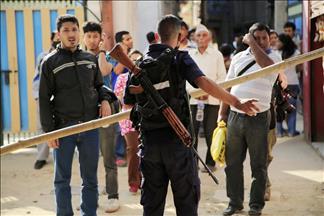
Hundreds of demonstrators from ethnic minorities took to the streets of Nepal's capital Sunday to again protest against the country’s new constitution.
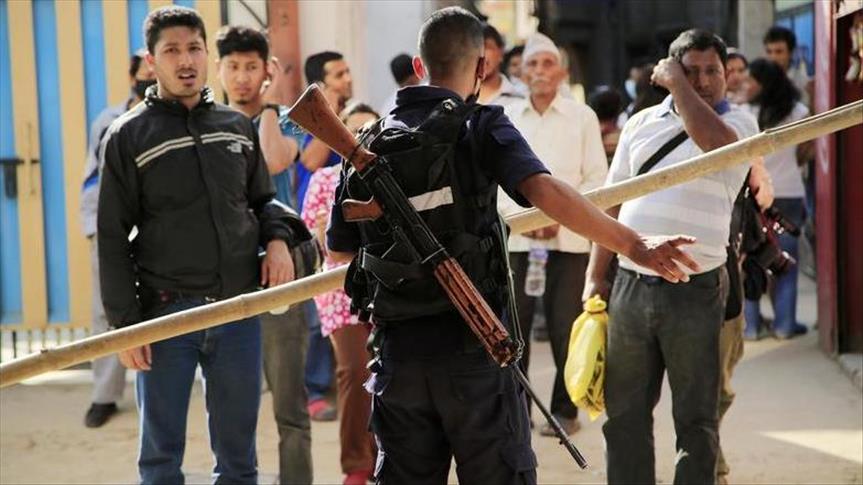
Wearing bandanas and carrying banner flags, the crowds blocked the entrance to the offices of central government in Kathmandu, in the process bringing the city’s rush hour traffic to a standstill.
“Let the exploited communities and workers unite! Let the regressive constitution be revoked,” banners read.
Hundreds of security forces in riot gear were deployed to guard the streets leading to the offices, while police said that protesters had attacked a government vehicle earlier in the day.
The protesters are led by the Madhesi minority group from the southern plains, and other minority groups who claim the country’s new constitution is discriminatory.
In a statement released Sunday, Sanghiya Samajbadi Forum, Nepal -- one of 27 parties participating in the protests -- said some of its members had been arrested in Kathmandu on Sunday.
“Police have confiscated 500 sets of our party’s flags and arrested six members,” it added.
But Bikram Singh Thapa, a police spokesman, denied the arrests, saying none had been made.
“The protest was peaceful, our personnel handled it with patience,” he told Anadolu Agency, adding that around 3,000 security personnel had been deployed in Kathmandu.
The protests -- which started countrywide in September last year after the government promulgated a post-war constitution -- have seen 60 people killed, including nine police officers.
Last year’s protests were organized along border crossings in the country’s southern plains, triggering crippling shortages of daily commodities in Nepal, which depends on India for trade and supplies.
Nepal’s coalition government has accused India of imposing a blockade to bolster the protesters, a charge India denies.
The two sides have held several rounds of talks, but have failed to agree due to differences on federal boundaries and representation of minorities in state institutions.
In January, Nepal’s parliament amended the constitution to address the protesters’ demands, but they have said it does not adhere to their requirements.
After widespread criticism from those who bore the brunt of the protests, the dissidents have changed tactics and regathered as peaceful demonstrations in Kathmandu to put pressure on the government.