Mahmoud Barakat
27 February 2016•Update: 28 February 2016
ANKARA/ALEPPO
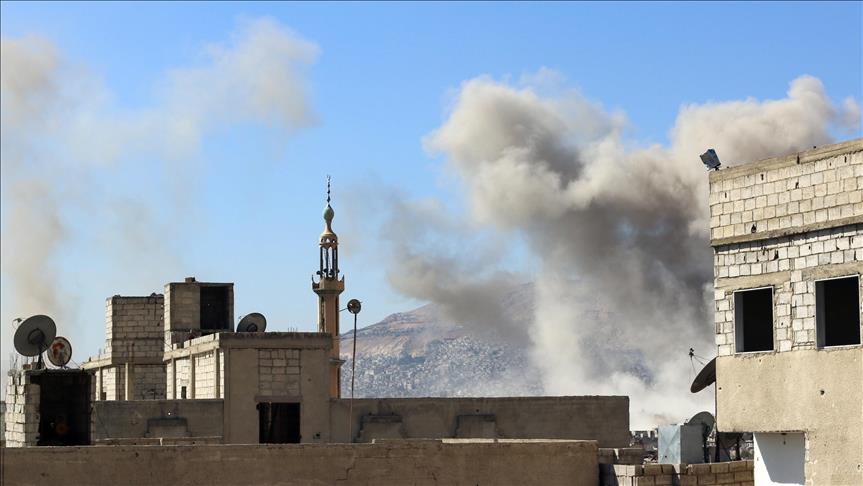
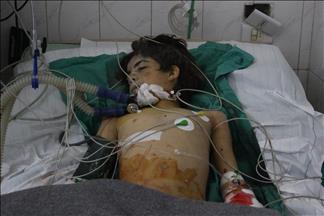
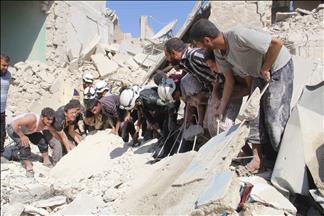
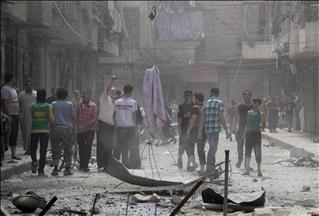
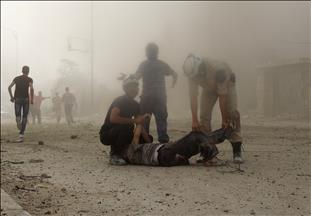
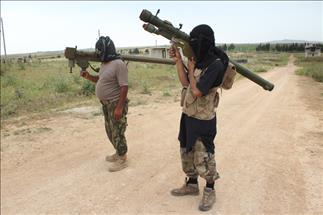
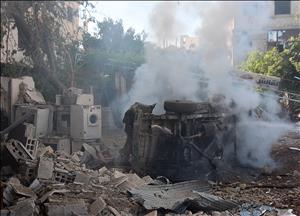
Since midnight Friday, when a temporary cessation-of-hostilities agreement went into effect in Syria, Assad regime forces have continued to attack opposition-held positions in the provinces of Aleppo, Homs, Daraa and Latakia.
Although no Russian airstrikes have been reported in Syria since the agreement went into effect, Russian President Vladimir Putin said Friday that Russian warplanes would continue targeting positions associated with terrorist groups -- such as Daesh -- operating in the country.
According to local sources, Hezbollah-backed regime forces attacked opposition positions after midnight Friday in the town of Talbiseh in Homs; the city of Anadan in Aleppo; the village of Al-Yadudah in Daraa; the town of Merj in the Eastern Ghouta area of the Rif Dimashq province; and the towns of Kafr Zita and Kafr Nabudah in Hama.
Regime forces have also continued to stage intense attacks on the villages of Kelez and Karamanli in Latakia province’s Turkmendagi region, also known as Turkmen Mountain.
Daesh, PYD clashes
Since midnight, fierce clashes have taken place between the PYD terrorist group and Daesh terrorists, with the latter attempting to infiltrate the PYD-held town of Tal Abyad north of the city of Raqqah, a Daesh stronghold.
Daesh terrorists have targeted the town with a car bomb, while clashes between both terrorist groups have occurred on the outskirts of the village of Munbatih some two kilometers west of Tal Abyad.
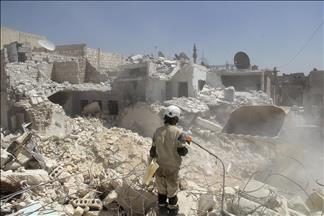
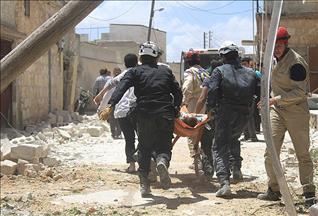
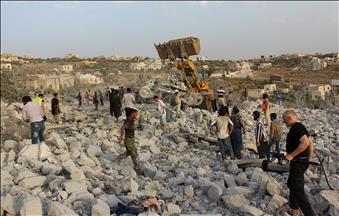
Only minutes before the cessation-of-hostilities agreement went into effect, Russian airstrikes killed ten people in Aleppo’s village of Kafr Hamra.
Moreover, two people were killed on Saturday morning when a bomb-laden vehicle blew up in the central-western Hama province, according to official Syrian news agency SANA.
The three days before the deal went into effect witnessed some of the most intense Russian air bombardments since Moscow first began its air campaign in Syria on Sept. 30 of last year.
Earlier this week, the cessation-of-hostilities deal was announced by both Washington and Moscow.
It is the latest in a series of diplomatic efforts ostensibly aimed at ending the conflict, which will soon enter its sixth year.
Daesh and Al-Qaeda’s Syria affiliate, the Nusra Front, along with other unspecified groups designated terrorist organizations by the UN Security Council, are not included in the agreement.
In a Friday statement, the pro-opposition Syrian High Negotiations Committee (HNC) -- which speaks for 97 opposition factions in Syria -- said the Free Syrian Army and other armed anti-regime opposition groups had agreed to comply with the terms of the deal.
Staffan de Mistura, the UN's special envoy for Syria, said Friday that -- if the truce holds -- he hoped to see peace talks resume on March 7 in Geneva with a view to guaranteeing the delivery of humanitarian aid to affected populations.
According to the UN, more than 250,000 people have been killed since the conflict in Syria began in 2011.