By Mainul Islam Khan
DHAKA
After almost two weeks of political instability and violence in Bangladesh there is little sign of a let-up, leaving foreign diplomats to weigh in as an attempt to break the political deadlock.
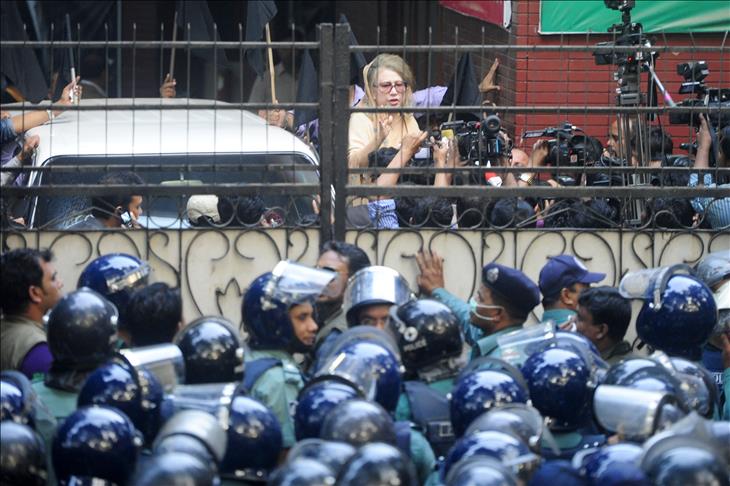
The stifling of the opposition Bangladesh Nationalist Party’s program of protests on Jan. 5, which marked a year since controversial elections they boycotted, has since descended into a rolling nationwide transport blockade.
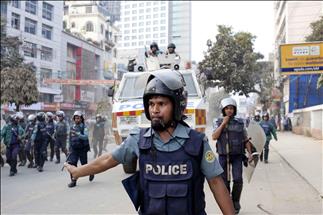
Pockets of violence have spread throughout the country; at least 25 people have been killed while buses defying the opposition blockade have been set alight and a senior Bangladesh Nationalist Party politician was shot in the capital, Dhaka.
The U.N. joined the growing chorus of concern coming from the international community on Friday when it called for the political parties to resolve their dispute, which is mainly about opposition demands for fresh elections.
“The deepening political violence in Bangladesh, resulting from the failure of the two major political parties to resolve their differences peacefully, is very disturbing," Ravina Shamdasani, spokeswoman for the Office of the High Commissioner for Human Rights.
“We are concerned about the potential for the violence, which already led to deaths, injury and disruption, to spiral,” she said, pointing as particularly “disturbing” the deaths of at least four people in an attack on a bus on Wednesday.
The statement also urged the government to ensure arrests of opposition leaders were “not arbitrary” and all measures to restore law and order complied with international human rights law.
Meanwhile, diplomats of eight western countries, led by the head of the EU delegation, Pierre Mayaudon, met a group of Bangladesh Nationalist Party leaders on Thursday in an attempt to broker an end to the political stand-off.
A day earlier the U.S., EU and British High Commission had circulated statements expressing concern over political situation.
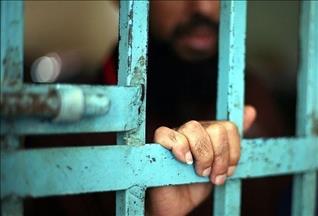
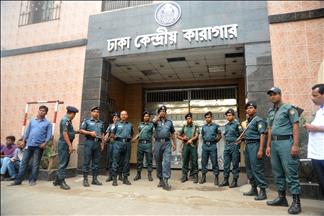
The police have begun a major nationwide drive to detain protesters while the head of the official paramilitary, Bangladesh Border Guards, Major General Aziz Ahmed said on Thursday that they would fire on anyone posing a threat to the public.
The international involvement has come at a time when seemingly neither the opposition nor the ruling Awami League are willing to ease away from their positions.
Apart from violence the economy is also suffering. Millions of dollars are lost daily through the blockade, with both the agricultural and industrial sectors crippled by their inability to transport goods and material.
“It is not acceptable that day after day an abnormal crisis continues,” said international relations expert Professor Imtiaz Ahmed. “The major two political parties fail to resolve the problems and until they find a solution, the foreign intervention will continue."
Professor Nazmul Ahsan Kalimullah, chairman of the National Election Observation Council, pointed out that as a member of the UN, Bangladesh should expect foreign pressure.
“Bangladesh has to follow certain protocols. So different international actors who follow those protocols have addressed the situation to all political parties on the ground, so that they do not forget those protocols and international obligations,” he said.
“Democracy is the good for citizen and it is the only solution for good governance. But, we can not do whatever we want in the name of democracy,” he said.
Political analyst and editor of local newspaper Shaptahik, Golam Mortoza, said that it is a domestic, rather than international, dispute that could be solved within Bangladesh.
“The crisis is political, so it is the politicians who should resolve it,” said Mortoza. “If they don't resolve their own problems, the foreign interference will continue.”