BANGKOK
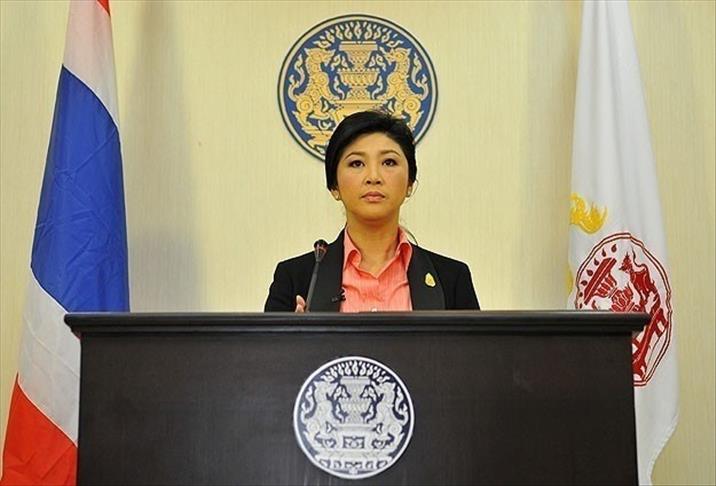
Thailand’s junta has rejected a request by former Prime Minister Yingluck Shinawatra to travel overseas to meet her elder brother Thaksin – another deposed premier – as criminal charges are expected to be filed against her, the military said Sunday.
Yingluck, who was removed from her post in May and banned from political activities for five years in an impeachment trial last month, could soon face criminal charges in relation to a loss-ridden rice-subsidies scheme.
She had asked to be allowed to travel to Hong Kong on Sunday to meet Thaksin, a divisive ex-premier deposed in a 2006 coup.
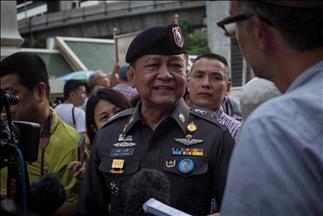
The request has been rejected, the Bangkok Post reported Colonel Winthai Suwaree as saying, without providing a clear explanation for the reasons behind the denial.
“This [criminal] case is now in the commencement stage, it is necessary for the junta to coordinate with several agencies concerned to seek legal advice on the right way to handling the matter,” Suwaree said, in the indirect manner often used by junta spokesmen.
The basis for the rejection seemed weak Sunday as criminal charges have yet to be filed against Yingluck, despite the attorney general’s office announcing last month that it would start a criminal process “soon” over her alleged failure to stop a rice-subsidies scheme that cost the state billions of dollars in losses.
The military, who seized power in a bloodless May 22 coup, may be seeking to avoid a repetition of what happened with Thaksin when he left Thailand in early 2008 and was later sentenced to two years in jail for abuse of power. He has been living in exile, mostly in Dubai, ever since.
If indicted and sentenced by the Supreme Court, Yingluck is liable to a jail term of up to ten years. If imprisoned, she would be the first-ever Thai prime minister to serve time.
Some observers have considered the piling up of charges against Yingluck as being aimed at entirely and permanently eradicating the Shinawatra clan from politics.
“It is hard to see how the Shinawatra family can keep a role in Puea Thai [their political party],” Michael Nelson, a sociologist who follows Thai politics, told The Anadolu Agency recently. “I am even not sure that they want to continue to have a role, especially with the criminal charge.”
In late January, U.S. Assistant Secretary of State for Asia-Pacific Affairs Daniel Russel -- the top-ranking American official to visit Thailand since the May 22 coup -- told a meeting at a local university that some countries could be “left with the impression that [the actions] against the former PM were politically driven.”
The speech incensed the Thai military and its supporters, triggering a cooling of Thai-U.S. relations.