BEIJING/WASHINGTON
The leader of an "occupy" movement that has caused havoc in Hong Kong's government district has praised protesters for their actions and renewed calls Monday for the territory's chief executive to resign.
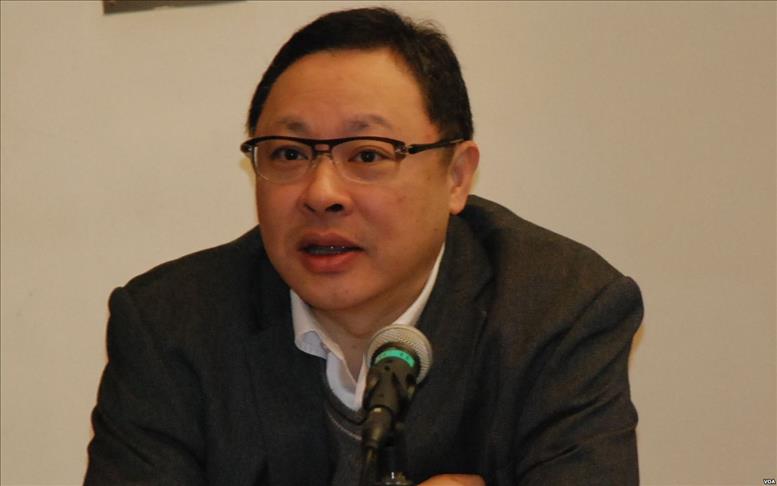
Ranks of demonstrators gathered in the heavily built-up area of Causeway Bay as Benny Tai Yiu-ting delivered a speech condemning the use of force by the territory's police, while calling for Leung Chun-ying's removal.
“People use peace and hope, while the government used tear gas and pepper spray,” the Hong Kong-based South China Morning Post quoted he told the crowd.
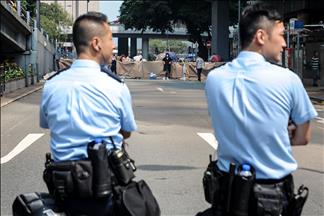
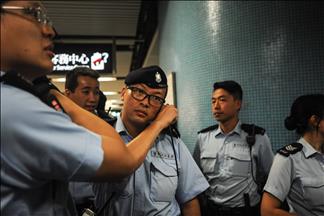
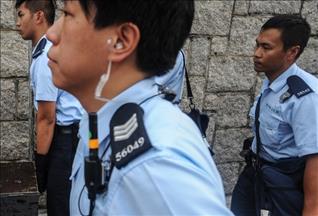
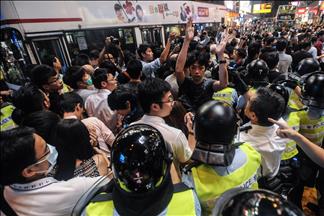
Police used batons and teargas Sunday night as they tried to remove protesters occupying a central government district, but protesters stood their ground Monday.
The protest , Occupy Central with Love and Peace, is calling on China's government to cease what it sees as interference in Hong Kong politics, demanding that the Chinese mainland allow the territory, an autonomous region on the southern coast of China, to choose its own leaders.
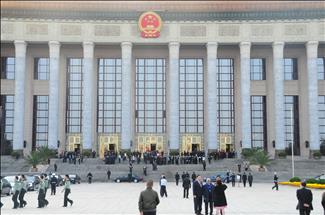
Beijing stressed Monday that Hong Kong remained under its sovereignty.
"We are opposed to any foreign and external interference in China's internal affairs by any country," said Foreign Ministry spokesperson Hua Chunying.
In August, China ruled that while Hong Kongers could choose their next chief executive in elections set for 2017, all candidates would first have to be approved by the central government.
In Washington, White House Press Secretary Josh Earnest urged Hong Kong authorities to use restraint and for protesters to voice concerns peacefully.
“The United States supports universal suffrage in Hong Kong in accordance with the basic law, and we support the aspirations of the Hong Kong people,” he said. “We also believe that the legitimacy of the chief executive will be enhanced if the election provides the people of Hong Kong a genuine choice of candidates that are representative of the peoples’ and the voters’ will.”
The South China Morning Post reported Monday that the movement's co-organizer, Chan Kin-man, urged protesters to remain where they are, and retreat only if weapons are used against them.
“Hong Kongers are fearless towards tear gas and think it is manageable,” the co-organizer said, according to the newspaper. “So I would not suggest protesters retreat at this moment.”
He added that people had taken it upon themselves to occupy unplanned areas of the territory - protesters are reported to have taken over three other areas, including Causeway Bay - thus “it was not for Occupy Central to decide the duration."
Leung has appealed to protesters to leave the government district of Harcourt Road, while fears build that the Chinese army might intervene.
In scenes described as "chaotic" by the newspaper, riot police used pepper spray, batons and teargas overnight to try to clear the street that protesters are now occupying for a second day. At least 46 people were injured in Sunday’s clashes, according to the Hospital Authority.
But on Monday, police had adopted a softer approach with the government saying in a website statement that police moved from the area “after road-blocking citizens had mostly calmed down.”
“I hope the public will keep calm. Don't be misled by the rumors,” said Leung. "Police will strive to maintain social order, including ensuring smooth traffic and ensuring the public safety."
In an earlier statement, Occupy Central said the crusade "a spontaneous movement" of all Hong Kong people.
"Anyone with a conscience should be ashamed to be associated with a government that is so indifferent to public opinion. We urge all executive councilors and government officials under the accountability system, and who have a conscience, to resign from their positions and to stand with the people," the statement continued.
Sunday's movement began three days ahead of a planned protest organized for Wednesday by Occupy Central leader Yiu-ting to bring the heart of Hong Kong to a standstill.
Wednesday is National Day, celebrated every Oct. 1 to mark the founding of the People's Republic of China in 1949.
www.aa.com.tr/en