HONG KONG
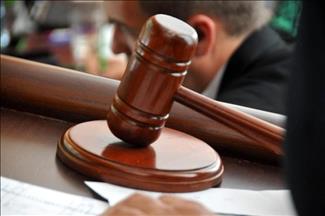
A Hong Kong court sentenced a mother of two to six years in jail Friday for abusing her Indonesian domestic worker in a case that highlighted the plight of foreign laborers in the international financial center.
District Court Judge Amanda Woodcock said Law Wan-tung, 44, had exhibited “contemptible” behavior that lacked compassion toward her victims, according to the South China Morning Post.
Law has been remanded in custody since Feb. 10, when she was convicted on 18 of 20 charges -- eight of which accused her of assaulting and criminally intimidating Erwiana Sulistyaningsih, 24, and another Indonesian, Tutik Lestari Ningsih.
Law was also ordered Friday to pay a fine of HK$15,000 (more than $1,900).
Woodcock had found Erwiana to be credible, describing her as a “simple village girl” who had not framed her employer, as Law’s lawyer alleged.
She ruled that the most serious charge– inflicting grievous bodily harm with intent -- stemmed from an incident in which Law twisted a metal tube from a vacuum cleaner in Erwiana’s mouth, resulting in cuts to her lips.
Law was also found guilty of punching her employee hard enough to crack her incisor teeth, as well stripping her of her clothes and splashing cold water on her during winter before pointing a fan at her.
Erwiana told reporters outside the court that she was pleased that Law would face prison time, despite finding the sentence to be a “light” term suggesting a tolerance for slavery and maltreatment of migrant workers.
“It is not OK … violation of our human rights is not OK. Slavery is not OK,” the Post quoted her as saying.
The case, which came to light in January last year when Erwiana returned to Indonesia and was examined by doctors, sparked protests by migrant workers and shined a light on the their lives amid reports of torture and killings.
As photographs of the wounded Erwiana circulated online, Indonesia's then president Susilo Bambang Yudhoyono described what she had been through as torture.
More than 300,000 foreign maids, mostly in their twenties and thirties and from Indonesia and the Philippines, work in the former British colony. They are often treated as second-class citizens and despite widespread reports of abuse, few cases make it to court.
Erwiana was named one of Time magazine's 100 most influential people last year.