By Stella Odueme
ABUJA
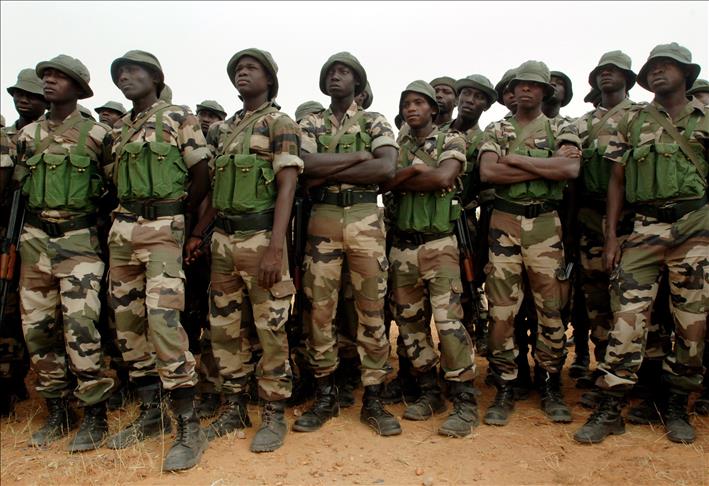
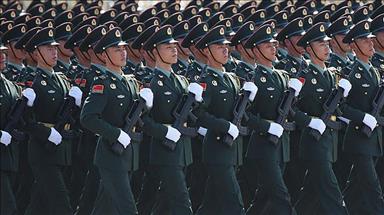
The Nigerian government said Thursday that it had recently resorted to buying arms from Russia and China and had cancelled part of a military training program with the U.S., but denied that the moves were due to strained relations with Washington.
"No right-thinking country will allow itself to be held hostage by another nation or be taken for granted in a free market," Mike Omeri, general director of Nigeria's National Orientation Agency and coordinator of the National Information Center, told a press briefing in Abuja.
"We did not start to use weapons from Russia today. The AK-47 assault rifle, along with others in our inventory, is from them [the Russians]," he added.
He attributed the cancelation of the training program to a "slight disagreement" over sensitive elements of the program.
Omeri said one Nigerian army battalion had completed two sections of the course, after which the U.S. had insisted that vital equipment – currently being used to fight Boko Haram in the country's northeast – should be withdrawn for use at the training center in Jaji in Kaduna State.
The government, he said, had objected to the request.
He also stressed that Nigeria had resorted to Russia and China for arms, as the country was at liberty to buy weapons from whatever parties it deemed fit.
Yet he asserted that Nigeria still shared intelligence with the U.S., appealing to Nigerians not to interpret the withdrawal as an escalation of a rumored rift with Washington over arms purchases.
He went on to insist that the equipment in question was critical to the ongoing fight in the country's northeast.
He argued that the removal of vital equipment from the government's armory in the northeast at this juncture would leave troops and local communities vulnerable to attack by Boko Haram, noting that, according to an initial agreement, the U.S. would supply all the equipment needed for the three-stage training program.
Omeri also attributed reluctance on the part of the military and the federal government to enlist hunters, vigilante groups and members of a civilian Joint Task Force JTF (a youth vigilante group) for ongoing counter-insurgency operations to fears that politicians could use them to settle political scores.
Omeri, who stressed that the military would not abandon its responsibility to defend the country's territorial integrity, noted that most hunters and vigilante groups relied on antiquated firearms or bows and arrows, while also contributing intelligence about the insurgents.
"We are currently training local government chairmen; showing them how to prepare their people to resist the insurgents with whatever means are available, and especially how to provide intelligence support to the armed forces whenever an attack is suspected," Omeri said.
Boko Haram, which first emerged in the early 2000s preaching against government misrule and corruption, became violent after the death of its leader in 2009 while in police custody.
In the five years since, the group has been blamed for numerous attacks and thousands of deaths.
In recent months, the group has captured a number of towns and villages in the northeastern states of Borno, Adamawa and Yobe, declaring them part of an "Islamic caliphate."
Along with Nigeria, Turkey and the U.S. have both designated Boko Haram a "terrorist organization."
www.aa.com.tr/en