By Aamir Latif
KARACHI, Pakistan
When Pakistan's Prime Minister Nawaz Sharif visited Saudi Arabia last week he was, according to local media reports, asked to send troops to assist in the defence of Saudi Arabia's borders from the militant group Daesh.
The request -- which was reportedly accompanied by a financial incentive -- is apparently still being mulled over by a cautious Sharif, who was welcomed at the airport by the King himself, in a country where Sharif once lived in exile.
An official handout issued by Pakistan's foreign ministry last week confirmed that security cooperation was discussed but there was no elaboration on media reports and noises coming from diplomatic circles that Saudi Arabia wanted Pakistani troops on its soil. Some media reports suggested that Sharif was worried sending troops to fight Daesh could exacerbate its own problem with Taliban militants.
Some security analysts believe the Saudi request has more to do with a proxy war between Saudi Arabia and Iran in the Middle East.
“Saudi Arabia is passing through one of the most critical periods of its history. On the one hand, Iran is advancing in the Iraq, Yemen, Bahrain and other Middle Eastern countries, while on the other hand the mysterious Daesh is posing knocking on its borders,” Arif Bihar, an Islamabad-based political and security analyst wrote in a column for Jasarat, an Urdu-language daily.
“But, the problem with Pakistan is its already being heavily engaged in efforts to settle down its internal issues. It cannot afford to throw his weight behind any one of them (Iran or Saudi Arabia),” he observed.
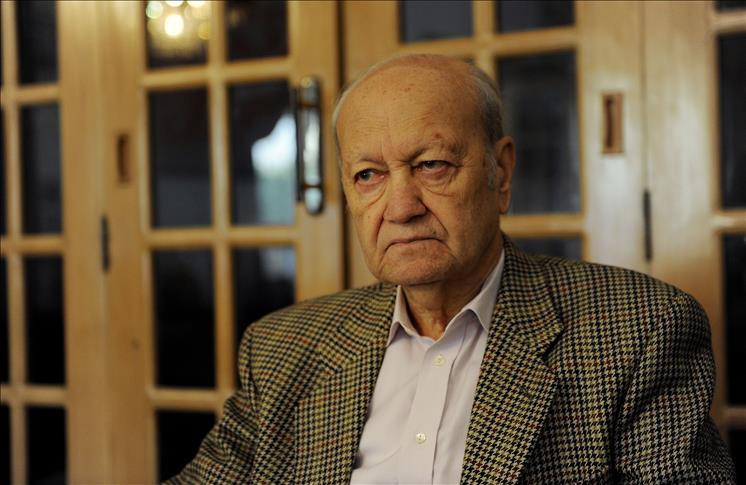
Talat Masood, another Islamabad-based security analyst, also believes the Saudi request goes beyond concerns about Daesh.
"In my opinion, the real purpose of proposed military cooperation between Riyadh and Islamabad is not to root out ISIL but to counter Iran’s growing influence in the Middle East,” said Masood. "Right from Iraq to Syria, and from Yemen to Libya, there is a deep clash of interests between the two countries. Saudi Arabia wants Pakistan's army to join its proposed Sunni alliance in the Middle east, which understandably is very difficult for Islamabad to do.”
Masood wonders however whether the rumoured financial incentive might lure Pakistan.
“Pakistan has had a history of joining international security pacts and alliances against financial gains. Whether it was a pact against former USSR in the 1960s, or the U.S.-led first Afghan war in 1979 or the U.S. invasion of Afghanistan to topple Taliban government in 2002, financial needs have always forced Pakistan to join such alliances,” he said.