By Ben Tavener
SAO PAULO
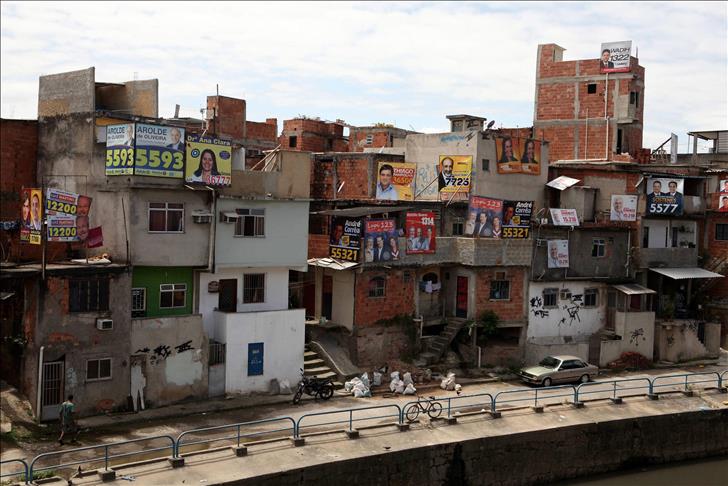
Tens of millions of voters began casting their ballots Sunday across Latin America's largest country in one of the most unpredictable and exciting Brazilian presidential elections seen in a generation.
Polling stations opened their doors at 8 a.m. Brasília time (1100 GMT) and will close soon after at 5 p.m. (2000 GMT).
Some 142.8 million people are eligible to take part in the vote, which is mandatory for those aged between 18 and 70.
As well as voting for one of 11 candidates vying for the presidency, Brazilians will also be asked to elect deputies, senators, state governors and state-level legislators.
President Dilma Rousseff, candidate for the Workers' Party, is seeking re-election to a second four-year term in office and remains the favorite. Three new polls released Saturday all suggested she would lead the field by a wide margin, but not enough to secure victory without a second round.
Saturday's polls also provided a final twist, with center-of-right Social Democracy Party candidate Aécio Neves overtaking former environment minister Marina Silva on the eve of the vote.
Silva's dramatic entry into the race, after the Socialist Party's original candidate Eduardo Campos was killed in a plane crash, saw her soar in the polls, leaving Neves trailing in an increasingly distant third, and posing a direct threat to Rousseff's second term and the Workers' Party's 12 years in power.
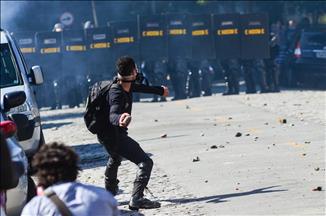
Rousseff appeared to be cruising to a second term, despite a flagging economy and poor public services that brought more than a million Brazilian out in massive anti-government street protests a year ago.
However, a subsequent onslaught of attacks from Rousseff and limited media exposure eroded support for Silva, who is now technically tied with -- and numerically behind -- Neves, the market favorite.
If none of the candidates for president or state governor breaks the 50 percent threshold, a second-round runoff will be held Oct. 26.
Votes are cast using an electronic urn, a practice first used in 1996 that Brazil pioneered and has been exported to other countries. Army units helped transport sealed boxes containing the urns across the country, including by air to the remotest locations.
Brazil has also continued to roll out a biometric identification counterpart to the electronic urn, for which a record 22 million voters have registered to use this year, representing a huge increase on the million voters identified this way in 2010.
Votes are encrypted and collected from the consoles, not connected to the Internet, by memory card. The results are transmitted to a central voting system through regional electoral headquarters. Results from remote locations and overseas embassies are transmitted by satellite.
The system, touted to be the world's fastest of its kind, delivered the results of the previous election between one and two hours after the polls close.
The vote will be followed by non-Brazilian observers, including 55 representatives from 21 different countries and international organizations.
Officials have dismissed recent newspaper reports that the electronic voting system could be vulnerable to cyberattacks, but said they were aware of attempts by hackers.
"The Electoral Court computer system is regularly attacked, but we have a huge defense system in place, which is activated when our clone systems are targeted," José Dias Toffoli, president of the Superior Electoral Court, told reporters.
No alcohol, no selfies
Election law in Brazil means that the 26 states and the Federal District have the option to ban the sale of alcohol for Sunday's vote. At least 15 states will enact the rule, according to the G1 news portal, but the provision will not cover the huge population areas in São Paulo and Rio de Janeiro states.
Also in accordance with the legislation, a ban on detentions and arrests has been in place since Wednesday and will continue for two days after the vote has concluded, to ensure voters are not prevented from performing their civic duty.
This rule does not apply in a small number of situations, including arrests made "in flagrante delicto" -- i.e. when caught in the act -- and for those charged with a crime for which bail is not granted.
However, voters and political activists could see themselves on the wrong side of the law on Sunday if they do not adhere to a strict code of conduct.
Taking photos inside the polling stations while voting, for example, could land offenders with a hefty fine and even a prison sentence. No equipment that could record or transmit the voting procedure is permitted, including mobile phones or tablets.
The rules also means voters and political activists are not allowed to sway other voters, including online posts or messages informing indicating which way one may have voted.
Protests and rallies for or against candidates, and processions are also not permitted on voting day, as well as any type of advertising for political parties or candidates, including clothing.
www.aa.com.tr/en