By Michael Hernandez
WASHINGTON
Pope Francis will arrive in Washington on Tuesday, kicking off a marathon tour of the U.S. that will take the pontiff across America’s eastern seaboard in a visit likely to address significant social issues facing the country.
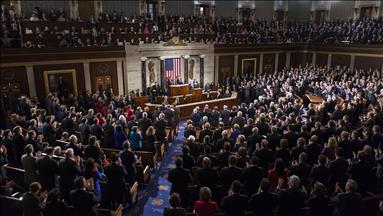
Francis’ visit comes at a time of heightened racial tensions in the U.S., concerns about wealth disparity, and a continued debate on the role of immigration – issues he is likely to address during a joint address to both houses of Congress on Thursday.
Fr. Matthew Carnes, a Jesuit priest and associate professor of government at Georgetown University, said he expects the pontiff’s speech to address “the importance of reaching across the gaps of inequality, and human responsibility for everyone who is in this country, and that those who have more actually have a responsibility to care for those that have less”.
That message may not sit well with a Republican-controlled legislature, many of whom find themselves at odds with Francis’ social justice-centric teachings on everything from climate change to income inequality.
During his time in the U.S., the pope will take his message to the highest echelons of American and international power – from the White House to the United Nations headquarters in New York.
His address to a joint session of Congress will be the first of any pope.
Equally, if not more important for Francis will be his interactions with everyday Americans who are expected to turn out in the hundreds of thousands at his public events. One-and-a-half million people are expected to attend the World Meeting of Families in Philadelphia alone.
When Francis tours the U.S. later this week he will be in the thick of America’s Catholic heartland.
As Frank Newport, research center Gallup’s editor-in-chief, puts it, “the pope is coming to the very area where the Catholic percentage is strongest – Middle Atlantic and New England are the strongest areas by far.”
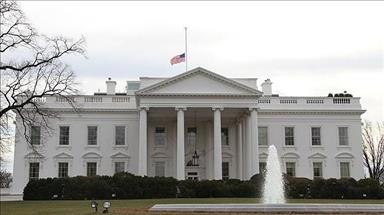
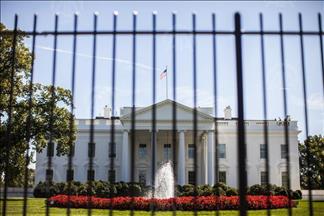
Nearly 15,000 people from across the religious spectrum, including Muslims, Hindus and Buddhists, are expected at the White House when Francis arrives.
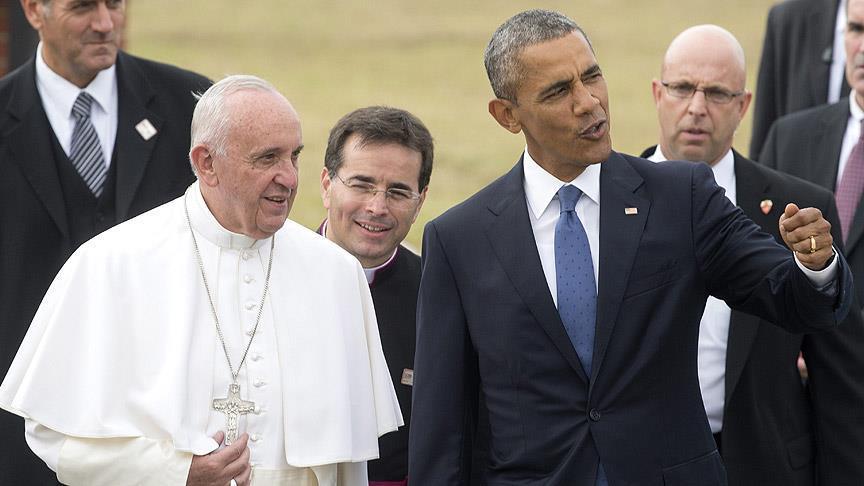
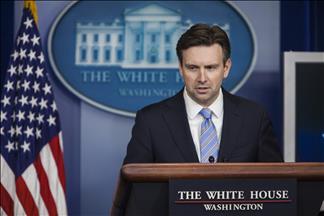
President Barack Obama last met with Francis at the Vatican in March 2014, and he is “looking forward to the chance to resume the conversation with the pope that he started last year,” according to Ben Rhodes, Obama’s deputy national security advisor.
But while the two leaders may share common concerns on climate change and the economic challenges facing America, they are likely to have significant differences on other church teachings, such as abortion and same-sex marriage.
“We are fully expecting that there will be some messages with which we may respectfully disagree or have differences,” said Charlie Kupchan, Obama’s National Security Council senior director for European Affairs.
Rhodes added that the pope “operates at a different plane,” and “whatever the issue is, we welcome the pope’s voice and leadership.”
While the leader of the world’s 1.2 billion Catholics has proven adept at serving as the Vatican’s head of state, he has built his reputation as a man of the people – he publicly embraces the sick; washes the feet of the marginalized, including an imprisoned Muslim woman in Rome; and eschews the splendor associated with his station.
“He has no qualms about speaking to anyone. The highest person on the planet, and the lowest person on the planet – he treats them exactly the same,” said Fr. Carnes. “He’s someone who looks people in the eye and I think that matters to people, they see him as someone who wants to know them in a particular way.”
That’s important for a religion that has, according to a Pew survey, seen a slight decline in the number of adherents between 2007 and 2014 – part of a larger trend in what Pew said was an overall decrease in American religiosity.
Newport, the Gallup editor-in-chief, challenged the findings, saying the percentage of Catholics in America has held relatively steady since the 1950’s.
“We have not seen a major decrease in the number of people who identify as Catholics,” he said.
According to Gallup, Catholics have remained relatively steady in their confidence in the church and organized religion since 2013 when Francis’s papacy began, which the research organization said “may be” due in part to his leadership.
The leveling off of Catholic attitudes follows a 2007 low, and a nosedive in 2002 that is due in part to a child sex abuse scandal that embroiled the Roman Catholic Church across continents.
“Some of that does relate, in fact, to the scandals revolving around priests and sex abuse, although we can’t pinpoint that precisely,” said Newport. “The sex abuse scandal has hurt the overall image of the church or organized religion.”
Nearly 850 priests have been defrocked due to charges of sexual abuse from 2004 through 2013, and more than 2,500 other clergy members have been sanctioned on lesser charges, according to the Vatican.
Francis has begged forgiveness from victims, and created a tribunal to prosecute those accused of wrongdoing.
That’s not enough, said David Clohessy, the director of the Survivors Network of those Abused by Priests, who urged the pope to be more aggressive in prosecuting church leaders accused of concealing the scandal.
“We want Francis to say, ‘I’m firing Bishop X, Bishop Y and Bishop Z because they knowingly put kids in harms way,’” he said. “Apologies ring hollow when there is no real reform by the church hierarchy.”
But even as the church continues to grapple with the scandal, it faces a separate crisis.
The number of its American clergy has seen a precipitous decline – falling from 58,632 in 1965 to 38,275 in 2014, according to Georgetown University. That's a 35 percent decline over the past 50 years.
That trend may be reversing among some religious orders, according to Carnes, the Georgetown University priest.
"It's only been two years since he's been pope, but there does seem to be some uptick, at least in Jesuit vocations" he said, referring to the religious order from which Francis hails.
At least two divisions, one in Minneapolis-St. Paul and the other in Los Angeles, have had to expand their facilities to address the sudden surge, according to Carnes.
"I'm a social scientist, so I don't like to speculate on just a year's data, but my sense is that there is a lot of interest in the welcome that Francis proclaims," he said.
Still, it’s not clear if the pope's popular appeal can fully translate into a solution for a problem that has plagued the church for decades.