11 May 2016•Update: 11 May 2016
By Max Constant
BANGKOK
A rights group cast doubt Wednesday on an official Thai delegation’s expressed commitment to the United Nations Human Rights Council to “fully respect human rights and to restore democratic rule”.
Thailand was questioned Wednesday at the Universal Periodic Review (UPR) in Geneva, under a process in which each UN member state has its human rights situation assessed every four and a half years.
The Geneva director of Human Rights Watch (HRW), however, criticized the Thai government’s responses to the review, saying they “fail to show any real commitment to reversing its abusive rights practices or protecting fundamental freedoms”.
“While numerous countries raised concerns about the human rights situation in Thailand, the Thai delegation said nothing that would dispel their fears of a continuing crisis,” John Fisher said in a statement.
Thailand last appeared before the UPR in 2011 under the elected government of Prime Minister Yingluck Shinawatra, which was overthrown in a May 2014 coup.
Yingluck's government had accepted 134 out of the 172 recommendations received from other counties during the process.
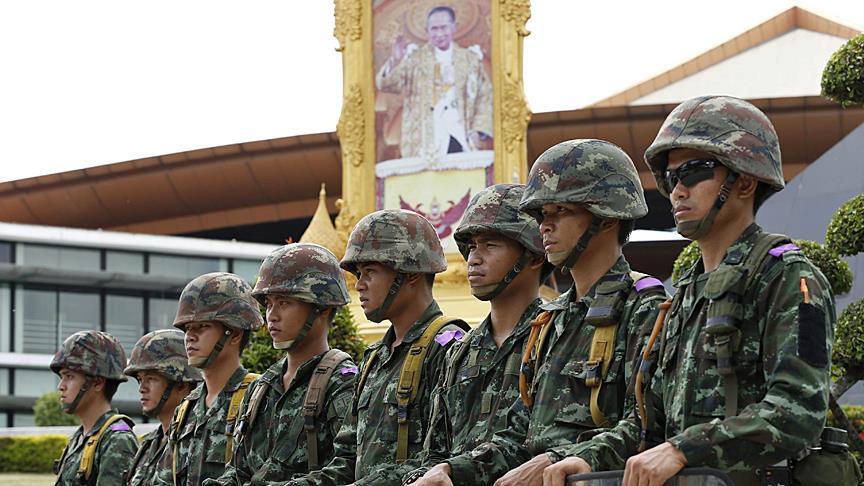
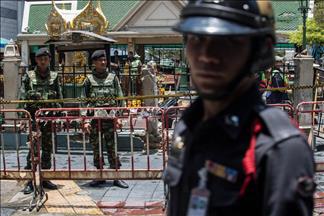
Since the coup, the junta has been condemned for repressing fundamental freedoms, particularly the right of assembly and the right of expression.
At least 46 people have been charged with sedition for criticizing military rule and violating the junta’s ban on public assembly.
On April 28, eight people were arrested and charged with sedition and computer crimes for creating and posting satirical comments and memes mocking junta leader-cum-Prime Minister Gen. Prayuth Chan-ocha.
A total of 1,340 activists, politicians, academics and journalists have been summoned for “adjusting their political attitude” and forced to undergo days-long coercive discussions in military camps.
Failure to abide by a summons is a criminal offense subject to trial in military courts.
The military has also made frequent use of a law punishing those deemed to be “insulting, defaming or threatening the king, the queen, the heir apparent and the regent” with a jail term of between three to 15 years.
Since the 2014 coup, 59 persons have been charged with lese-majeste, mostly for posting comments online.
Judges have tended to interpret the lese-majeste law -- under which suspects are tried by military courts -- very broadly.
Last December, a man was charged for posting sarcastic content about King Bhumibol Adulyadej’s dog on his Facebook page.
Further questions about the “democratization” process under the military government have been raised after a junta-appointed committee put together a draft constitution establishing a 250-member senate fully appointed by the military.
It also cements in place a 20-year national strategy committee that will be entitled to survey government policies and have them changed if they diverge from reforms envisioned by the junta.
“Instead of paving the way for a return to democratic civilian rule as promised in its so-called ‘road map,’ the junta has imposed a political structure that seems designed to prolong the military’s grip on power,” HRW said Wednesday.
“No one should be fooled by the Thai government’s empty human rights promises,” Fisher said in the statement.
“UN member countries should firmly press Thailand to accept their recommendations to end the dangerous downward spiral on rights by ending repression, respecting fundamental freedoms, and returning the country to democratic civilian rule,” he added.
Thai human rights organizations held a seminar on human rights at a Bangkok coffee shop as a live broadcast of Wednesday’s UPR played on a screen.