BANGKOK
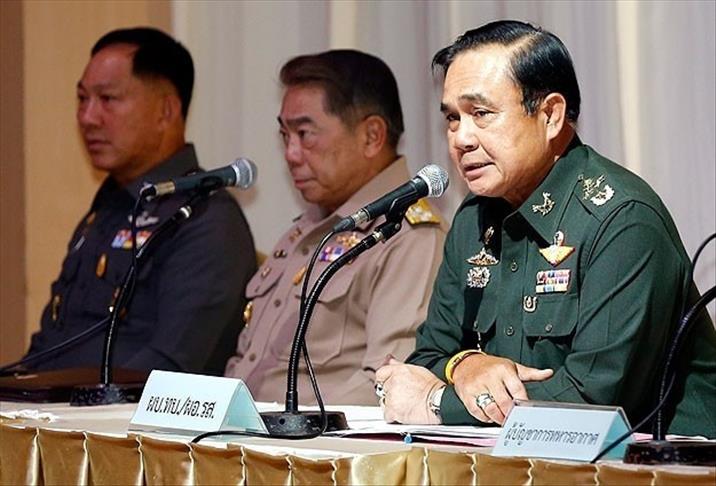
King Bhumibol Adulyadej has agreed to a request by junta chief-cum-Prime Minister General Prayuth Chan-ocha to lift martial law in Thailand almost one year after it was imposed.
The decision -- announced late Wednesday -- sees the decree replaced with article 44 of the interim constitution, which has been widely criticized by activists.
The article gives the junta leader "the powers to make any order to disrupt or suppress any act that undermines public peace and order, or national security, the monarchy, national economy or administration of State affairs."
The orders are considered legal per se, and override any decision by executive, legislative and judicial powers.
In a statement published a few hours before the decree was lifted, Human Rights Watch warned authorities against the use of article 44.
"General Prayuth’s [Prayuth Chan-ocha] activation of article 44 will mark Thailand’s deepening descent into dictatorship," said Asia director Brad Adams.
"Thailand’s friends abroad should not be fooled by this obvious sleight of hand by the junta leader to replace martial law with a constitutional provision that effectively provides unlimited and unaccountable powers."
The Geneva-based International Commission of Jurists has also criticized the article.
"Article 44 would allow the head of the NCPO [the junta's National Council for Peace and Order] to issue any orders he wishes under the pretext of strengthening public unity and national security," said secretary-general Wilder Tayler in a statement Wednesday morning.
He added that it also allows Chan-ocha to deem any such order legal and constitutional, "removing any possibility of judicial oversight."
On Tuesday, Chan-ocha had tried to reassure his critics by telling local reporters that he will only use article 44 to "move the country forward more conveniently."
"I need to use power under article 44 to allow the authorities to conduct quickly searches and arrests without having to wait for a court warrant," he was quoted as saying by The Nation.
Chan-ocha said that among the first orders which will be issued under the article will be the authorization of detention without charge for seven days and the use of military courts for national security offenses.
Politicians have also expressed fears of the absolute power it appears to grant Chan-ocha, even members of those seen to support the coup.
"Invoking Article 44 will destroy the confidence of both domestic and international communities. Especially the international community who will see Thailand as more of a dictatorship," Sathit Pitutecha, deputy-chairman of the Democrat Party, told The Nation.
Junta members and their political allies tried to assuage critics Tuesday.
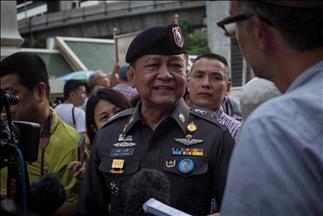
People should "trust" Chan-ocha, said General Prawit Wongsuwan, deputy-prime minister and minister of defense -- the second most powerful man in the junta.
He told reporters that article 44 would be used to "prevent bad people from doing bad things to the country."
"Good people need not to be worried. There will not be any violation of human rights," he added.
Pornpetch Wichitcholchai, chairman of the junta-appointed National Assembly concurred.
"In the past, General Prayuth Chan-ocha has never used power in a wrong or excessive way," he sought to underline.
Martial law was imposed May 20, two days before the military overthrew the elected government of Yingluck Shinawatra and seized power.