BANGKOK
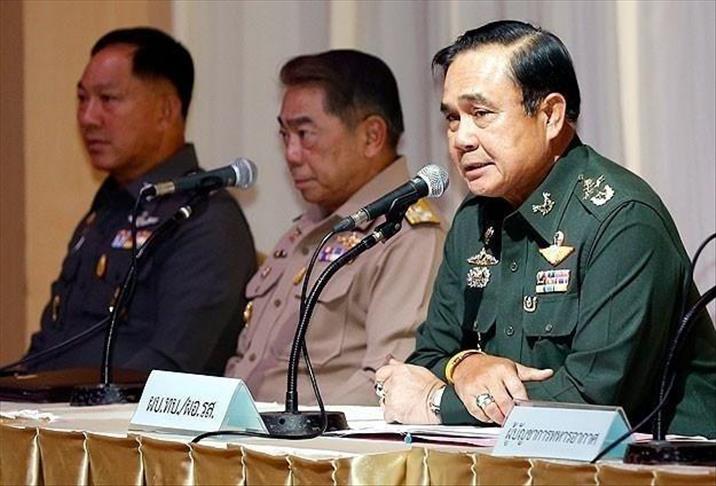
One month after the European Union threatened Thailand with a trade ban if it didn't clean up aspects of its seafood industry, Junta chief-cum-Prime Minister Prayuth Chan-ocha has begged the bloc for mercy.
The premier was reported as saying in the Bangkok Post on Friday that the country had "been wrong" about the matter for a long time "so it is up to the EU to show us some mercy."
“It is a world organization which only maintains a single standard, and since we have breached its standard, we have to accept the mistake."
On March 21, the EU gave Thailand six months to combat illegal and unregulated fishing or face a seafood import ban -- which could cause losses of almost $1 billion to the Kingdom, the world third largest seafood producer.
Many Thai trawlers employing migrants -- mostly from Myanmar and Cambodia -- fish illegally in international waters, sometimes spending years without returning to Thai shores.
The catch is transferred to smaller vessels, which return to port instead of the larger boats so as not to alert the maritime police.
According to the UK-based NGO Environmental Justice Foundation, migrant workers often work in "slave-like conditions" on these trawlers.
They frequently do not receive any pay and are unable to leave.
A Guardian investigative report published in June last year detailed how migrant workers were routinely beaten up and sometimes killed by supervisors.
The report pushed French retail chain Carrefour to stop buying seafood from Charoen Pokphand, one of the largest Thai food conglomerates.
On Wednesday, Chan-ocha used extensive powers granted by article 44 of the interim constitution to set up a command center for combating illegal fishing, headed by the navy chief.
Under the article, the center is given "absolute power" to control and supervise fishing by Thai trawlers and the management of laborers in the fishing industry.
The center has said it will register all vessels, control their movements, keep detailed records of their activities and install monitoring systems on the boats.
Chan-ocha warned that despite the integration of the new measures it was still at the hands of the EU.
"Everything is up to the EU and no matter how hard we try, if they don’t give their approval we cannot do anything about it," he said.
The EU warning comes as the value of Thai exports, which contribute 60 percent of Thai GDP, fall slowly.
On Tuesday, the government slashed its export forecast for this year from 4 percent to 1.2 percent after exports shrank in March for a third consecutive month.